

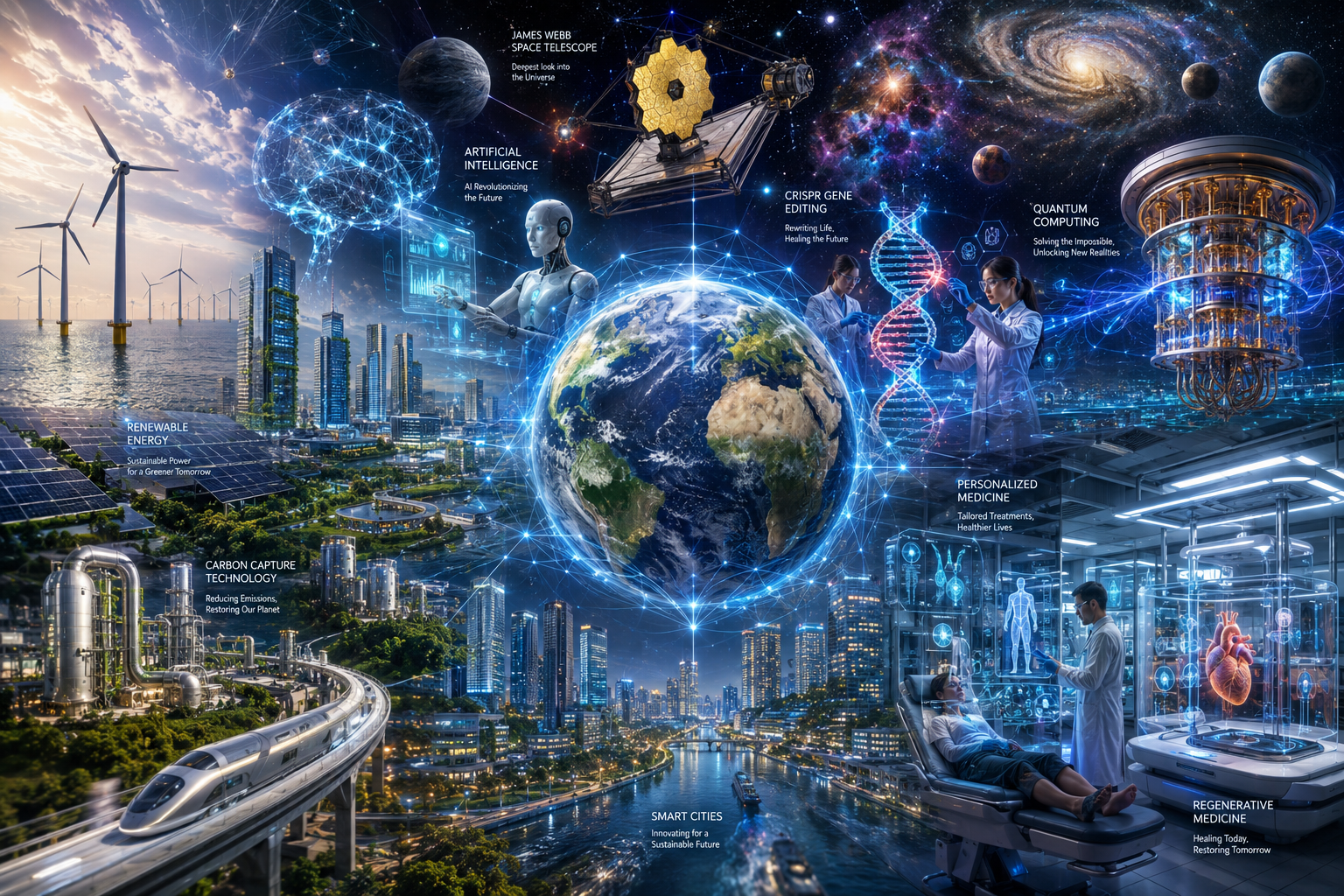
Top Scientific Discoveries Changing the World
Understanding the Power of Scientific Discovery
Science has always been humanity’s most reliable tool for understanding the universe and solving complex problems. Every major advancement in civilization, from electricity and vaccines to the internet and satellite communication, began with a scientific discovery that expanded human knowledge. Today, scientific progress is occurring faster than ever before. Researchers across the globe collaborate through advanced technologies, massive databases, and powerful computing systems that allow them to analyze information at unprecedented speeds. As a result, discoveries that once took decades can now emerge within years or even months.
The impact of scientific discoveries extends far beyond laboratories. New findings influence healthcare systems, business operations, transportation networks, environmental policies, and even daily routines. Consider how smartphones combine breakthroughs in materials science, telecommunications, artificial intelligence, and battery technology. Most people use these innovations without realizing the enormous scientific effort behind them. Scientific discoveries serve as the foundation upon which modern societies build economic growth, public health, and technological advancement.
The interconnected nature of today’s world means that a breakthrough in one field often triggers progress in several others. For example, advances in genetics have influenced medicine, agriculture, and biotechnology simultaneously. Similarly, developments in computing power have accelerated research in climate science, physics, and engineering. This chain reaction of innovation highlights why scientific discovery remains one of the most important drivers of human progress.
Why Breakthroughs Matter for Humanity
Scientific breakthroughs improve quality of life by addressing challenges that affect billions of people. Diseases that once devastated populations can now be prevented or treated through vaccines and targeted therapies. Agricultural innovations help farmers produce more food while using fewer resources. Renewable energy technologies provide alternatives to fossil fuels and help reduce greenhouse gas emissions.
Breakthroughs also expand our understanding of reality. Discoveries about the origins of the universe, the structure of DNA, or the behavior of subatomic particles may not immediately change everyday life, but they fundamentally alter how humanity perceives itself and its place in the cosmos. Knowledge has intrinsic value, and scientific exploration satisfies humanity’s deep curiosity about the world.
Economic benefits are equally significant. According to estimates from the World Economic Forum and OECD studies, innovation-driven industries contribute trillions of dollars to global economic activity each year. Countries that invest heavily in research and development often experience stronger long-term economic growth, increased productivity, and higher living standards.
Scientific breakthroughs frequently emerge during periods of crisis. The rapid development of mRNA vaccines during the COVID-19 pandemic demonstrated how scientific expertise can respond to urgent global threats. What once appeared impossible became reality through years of foundational research combined with international collaboration.
The Accelerating Pace of Modern Science
Modern scientific advancement is accelerating due to several powerful factors. First, computing technology allows researchers to process enormous quantities of data. Machine learning algorithms can identify patterns that would take humans decades to discover manually. Scientists now analyze genomes, climate systems, and astronomical observations at scales unimaginable just a generation ago.
Second, global collaboration has transformed research. Scientists from different continents can work together in real time, sharing findings instantly through digital platforms. Large-scale projects such as the Human Genome Project and the Large Hadron Collider demonstrate how international cooperation can achieve extraordinary results.
Funding and private-sector involvement have also increased. Technology companies, biotechnology firms, and space exploration organizations invest billions of dollars into research and development. This investment creates a powerful ecosystem where scientific ideas move rapidly from laboratories into practical applications.
The rise of interdisciplinary research further accelerates innovation. Biologists collaborate with computer scientists, physicists work alongside engineers, and medical researchers partner with artificial intelligence specialists. These partnerships generate creative solutions that would rarely emerge within isolated fields of study. As these trends continue, the pace of discovery is expected to become even faster in the coming decades.
Artificial Intelligence and Machine Learning
Artificial intelligence represents one of the most transformative scientific developments of the 21st century. Unlike traditional software that follows fixed instructions, AI systems learn from data and improve their performance over time. This capability allows machines to perform tasks that previously required human intelligence, including language translation, image recognition, decision-making, and predictive analysis.
The rapid growth of AI has been driven by advances in computing power, data availability, and neural network architectures. Modern AI models can analyze vast datasets, identify complex patterns, and generate insights with remarkable speed. Businesses use AI to optimize operations, governments employ it for public services, and researchers leverage it to accelerate scientific discovery itself.
According to industry reports, the global AI market is projected to exceed hundreds of billions of dollars in value within the next decade. Organizations increasingly rely on AI to improve productivity, reduce costs, and enhance customer experiences. From recommendation systems on streaming platforms to fraud detection in financial institutions, AI has become deeply embedded in modern life.
Despite its enormous potential, AI raises important questions regarding ethics, privacy, transparency, and employment. Policymakers and researchers continue working to ensure that AI systems remain safe, fair, and beneficial. The challenge lies in balancing innovation with responsible governance while maximizing societal benefits.
How AI Is Transforming Industries
Artificial intelligence is reshaping nearly every major industry. Manufacturing companies use predictive maintenance systems that detect equipment failures before they occur. Retail businesses analyze consumer behavior to personalize shopping experiences. Financial institutions deploy AI algorithms to identify suspicious transactions and manage investment portfolios.
Transportation is undergoing significant transformation through autonomous vehicle technologies. Self-driving systems combine sensors, cameras, and machine learning algorithms to navigate roads and respond to changing conditions. While fully autonomous transportation remains under development, substantial progress continues each year.
Education has also benefited from AI-powered learning platforms that adapt content to individual student needs. Personalized learning experiences help improve engagement and knowledge retention. Teachers can use AI tools to automate administrative tasks and focus more on instruction and student support.
Scientific research itself has become more efficient through AI-assisted discovery. Machine learning models help identify new drug candidates, predict protein structures, and analyze complex experimental data. The Nobel Prize-winning work involving AI-driven protein folding predictions highlights the technology’s growing role in advancing scientific knowledge.
AI in Healthcare and Research
Healthcare may be one of the most impactful areas influenced by artificial intelligence. AI systems can analyze medical images with remarkable accuracy, assisting radiologists in detecting conditions such as cancer, fractures, and cardiovascular disease. Early diagnosis often improves treatment outcomes and reduces healthcare costs.
Researchers are also using AI to accelerate drug development. Traditional pharmaceutical research can take many years and require billions of dollars. Machine learning algorithms help identify promising compounds more efficiently, potentially reducing development timelines. During recent health emergencies, AI-assisted analysis supported vaccine and therapeutic research efforts.
Hospitals increasingly use AI-powered predictive tools to monitor patient health and identify individuals at risk of complications. These systems can analyze vital signs, laboratory results, and medical histories to support clinical decision-making. While AI does not replace healthcare professionals, it enhances their ability to provide effective care.
The future may bring even more advanced applications, including personalized treatment recommendations based on genetic information and real-time health monitoring through wearable devices. As these technologies mature, healthcare could become more preventive, precise, and accessible.
Gene Editing and CRISPR Technology
The discovery and development of CRISPR-Cas9 gene-editing technology has fundamentally changed biology and medicine. Often compared to a molecular pair of scissors, CRISPR allows scientists to precisely modify DNA sequences within living organisms. Before CRISPR, genetic engineering was possible but often expensive, slow, and technically challenging. The arrival of this technology dramatically lowered barriers, enabling researchers around the world to explore genetic modifications with unprecedented accuracy and efficiency.
At its core, CRISPR originated from a natural defense mechanism used by bacteria to protect themselves from viruses. Scientists discovered that bacteria store fragments of viral DNA and use them to recognize and neutralize future threats. By adapting this mechanism, researchers created a powerful tool capable of targeting specific genetic sequences and making precise changes. This breakthrough transformed genetic research almost overnight.
The implications extend far beyond laboratories. Genetic diseases that were once considered lifelong and untreatable are now becoming potential candidates for curative therapies. Conditions such as sickle cell disease, cystic fibrosis, and certain inherited forms of blindness have become major targets for gene-editing research. Clinical trials around the world continue to demonstrate encouraging results, suggesting that genetic medicine could become a cornerstone of future healthcare.
Agriculture has also benefited from CRISPR technology. Scientists can develop crops that resist pests, tolerate drought conditions, and require fewer chemical inputs. As global populations continue to grow and climate challenges intensify, these innovations may help improve food security while reducing environmental impact. The combination of medical, agricultural, and industrial applications makes CRISPR one of the most influential scientific discoveries of modern times.
The Science Behind Genetic Engineering
Genetic engineering revolves around the ability to alter an organism’s DNA in ways that produce desired traits or outcomes. DNA functions as the biological instruction manual for life, containing the information needed for growth, development, and cellular function. By modifying specific sections of DNA, scientists can influence how genes operate and how organisms express particular characteristics.
CRISPR works by using a guide RNA that directs the Cas9 enzyme to a precise location within the genome. Once there, Cas9 cuts the DNA strand, allowing scientists to remove, replace, or insert genetic material. The precision of this method distinguishes it from earlier genetic modification techniques, which often produced less predictable results.
The scientific community views gene editing as a transformative research platform because it enables direct investigation of gene function. Researchers can study how individual genes contribute to diseases, developmental processes, and biological systems. This capability accelerates understanding and opens new avenues for treatment development.
Beyond medicine, genetic engineering contributes to industrial biotechnology. Microorganisms can be modified to produce medicines, biofuels, and specialized materials more efficiently. The ability to engineer biological systems creates opportunities that extend across healthcare, manufacturing, agriculture, and environmental management. As researchers continue refining gene-editing tools, the range of possible applications is expected to expand dramatically.
Potential Benefits and Ethical Concerns
The potential benefits of gene editing are extraordinary. Scientists envision a future where inherited diseases can be corrected before symptoms appear, reducing suffering for millions of people. Personalized treatments could target genetic mutations unique to individual patients, creating highly effective medical interventions. Agricultural improvements could increase crop yields while reducing reliance on pesticides and fertilizers.
Yet powerful technologies inevitably raise ethical questions. One major concern involves editing human embryos, particularly when modifications could be passed to future generations. While therapeutic applications may prevent serious diseases, some worry about the possibility of “designer babies” and genetic enhancement beyond medical necessity. These debates highlight the need for careful regulation and international cooperation.
Another concern involves unintended consequences. Even highly precise technologies can occasionally produce unexpected genetic changes. Researchers continue developing safeguards to improve accuracy and minimize risks. Long-term monitoring remains essential to ensure that treatments are both safe and effective.
Public trust also plays a critical role. Transparent communication between scientists, policymakers, and communities helps ensure responsible development of genetic technologies. Balancing innovation with ethical responsibility will determine how society ultimately benefits from this remarkable scientific breakthrough.
Quantum Computing Revolution
Quantum computing represents one of the most fascinating scientific frontiers of the modern era. Traditional computers process information using bits that exist as either 0 or 1. Quantum computers use qubits, which can exist in multiple states simultaneously through a phenomenon known as superposition. This capability allows quantum systems to perform certain calculations far more efficiently than conventional machines.
The concept may sound abstract, but its implications are profound. Problems that could take classical supercomputers thousands of years to solve might eventually be handled by advanced quantum systems in a fraction of the time. Scientists and technology companies have invested heavily in this field because of its potential to revolutionize computation, optimization, cryptography, and scientific modeling.
Quantum mechanics, the branch of physics underlying these machines, describes behavior at the smallest scales of reality. Concepts such as superposition and entanglement challenge intuitive understanding, yet they provide extraordinary computational possibilities. Researchers continue working to overcome technical challenges including error correction, stability, and scalability.
While fully mature quantum computers remain under development, progress has accelerated significantly. Major technology firms, universities, and government agencies are competing to build increasingly powerful quantum systems. The race resembles the early days of classical computing, when researchers recognized immense potential but had yet to unlock widespread practical applications.
What Makes Quantum Computers Different
The key difference between classical and quantum computing lies in how information is represented and manipulated. Classical computers evaluate possibilities sequentially or through parallel processing using conventional logic. Quantum computers exploit quantum mechanical properties to explore multiple possibilities simultaneously.
This advantage becomes particularly significant when addressing highly complex problems involving enormous numbers of variables. Tasks such as molecular simulation, cryptographic analysis, and optimization can overwhelm traditional systems due to computational limitations. Quantum machines may eventually handle these challenges much more effectively.
One frequently cited example involves drug discovery. Simulating molecular interactions accurately is extraordinarily difficult for classical computers because molecules behave according to quantum principles. Quantum computers could potentially model these interactions directly, accelerating pharmaceutical research and enabling discoveries that would otherwise remain out of reach.
The field remains highly experimental, and practical quantum advantage for many real-world applications is still emerging. Nevertheless, each breakthrough brings researchers closer to realizing the technology’s transformative potential. The combination of physics, engineering, mathematics, and computer science makes quantum computing one of the most interdisciplinary scientific endeavors of our time.
Real-World Applications on the Horizon
Quantum computing promises applications across numerous sectors. In healthcare, researchers hope to simulate biological systems more accurately, leading to faster drug development and improved understanding of disease mechanisms. Financial institutions are exploring quantum algorithms for portfolio optimization, risk assessment, and market analysis.
Supply chain management represents another promising area. Large logistics networks involve countless variables and constraints that challenge conventional optimization methods. Quantum systems may eventually identify more efficient routes, schedules, and resource allocations, reducing costs and environmental impact.
Cybersecurity presents both opportunities and challenges. Quantum computers could break certain encryption methods currently used to protect digital communications. At the same time, scientists are developing quantum-resistant cryptography and quantum communication systems designed to provide unprecedented levels of security.
Climate science could also benefit substantially. Advanced simulations of atmospheric systems, energy technologies, and environmental processes may improve predictive accuracy and support more effective policy decisions. While widespread quantum computing remains a future goal, its potential influence on science and society is difficult to overstate.
Renewable Energy Breakthroughs
The transition toward renewable energy represents one of the most important scientific and technological shifts in human history. As concerns about climate change, air pollution, and energy security continue to grow, researchers have focused intensely on developing cleaner and more sustainable energy sources. Scientific discoveries in solar power, wind energy, battery storage, and grid management are transforming how the world generates and consumes electricity.
Renewable energy technologies have improved dramatically over the past two decades. Solar panels are more efficient than ever, wind turbines generate greater output, and energy storage systems have become increasingly practical. These advancements have reduced costs while expanding accessibility, making renewable energy competitive with traditional fossil fuels in many regions.
According to the International Energy Agency (IEA), renewable energy capacity additions have reached record levels globally. Solar power, in particular, has become one of the fastest-growing sources of electricity generation. This growth reflects not only environmental concerns but also economic realities, as renewable technologies continue becoming more affordable and scalable.
The broader significance extends beyond electricity production. Renewable energy supports sustainable development, reduces greenhouse gas emissions, and creates new industries and employment opportunities. Scientific innovation remains central to overcoming remaining challenges and building a cleaner energy future.
Advances in Solar and Wind Technology
Solar energy has experienced remarkable progress thanks to improvements in photovoltaic materials and manufacturing processes. Modern solar panels convert sunlight into electricity with significantly higher efficiency than earlier generations. Researchers are also exploring advanced materials such as perovskites, which could further increase performance while reducing production costs.
Wind energy has followed a similar trajectory. Today’s turbines are larger, more efficient, and capable of generating electricity under a wider range of conditions. Offshore wind farms, in particular, have emerged as powerful sources of renewable energy because ocean winds tend to be stronger and more consistent than those on land.
Scientific advances in materials engineering have contributed significantly to these improvements. Stronger, lighter materials enable the construction of larger turbine blades and more durable solar installations. Artificial intelligence and predictive analytics also help optimize performance by monitoring equipment and forecasting environmental conditions.
The combination of solar and wind technologies creates a complementary energy system. Solar production peaks during daylight hours, while wind patterns often differ by location and time. Integrating these resources helps create a more reliable and resilient energy infrastructure capable of supporting growing demand.
Energy Storage and Next-Generation Batteries
Renewable energy’s greatest challenge has historically been intermittency. The sun does not always shine, and the wind does not always blow. Scientific breakthroughs in energy storage are helping address this issue by enabling excess energy to be stored and used when needed.
Lithium-ion batteries have become the dominant storage technology due to their efficiency and declining costs. These batteries power electric vehicles, consumer electronics, and grid-scale storage systems. Continued research focuses on improving capacity, lifespan, safety, and sustainability.
Scientists are also developing next-generation battery technologies, including solid-state batteries, sodium-ion batteries, and advanced flow batteries. These innovations could offer higher energy density, faster charging, and reduced dependence on scarce materials. Such improvements would strengthen renewable energy adoption and accelerate transportation electrification.
Large-scale energy storage systems play a crucial role in modernizing electrical grids. By balancing supply and demand, they help maintain stability while supporting increasing amounts of renewable generation. As battery technology continues advancing, energy systems around the world will become more flexible, reliable, and sustainable.
Space Exploration and Astronomy Discoveries
Humanity has always looked toward the night sky with curiosity, but recent scientific discoveries have transformed astronomy from a field of observation into one of astonishing revelation. Modern telescopes, robotic probes, and advanced imaging technologies are providing insights into the origins of the universe, the formation of galaxies, and the possibility of life beyond Earth. What once belonged to science fiction is increasingly becoming scientific reality.
One of the most significant developments in recent years has been the deployment of powerful space observatories such as the James Webb Space Telescope (JWST). By observing infrared light, JWST can peer through cosmic dust clouds and examine some of the earliest galaxies formed after the Big Bang. The telescope has already delivered images and data that are reshaping scientific understanding of the universe’s early history.
Space exploration has also expanded beyond observation. Robotic missions have explored Mars, asteroids, and distant planetary systems, gathering information about planetary formation and the ingredients necessary for life. These missions help answer fundamental questions about whether Earth is unique or whether life might exist elsewhere in the cosmos.
The economic and technological impact of space exploration should not be underestimated. Satellite systems support communication, navigation, weather forecasting, agriculture, and disaster management. Technologies developed for space missions often find applications in healthcare, materials science, and engineering. Space science therefore contributes both to human knowledge and practical innovation on Earth.
New Insights from Modern Telescopes
Modern astronomy has entered a golden age thanks to increasingly sophisticated observational instruments. Telescopes now collect data across multiple wavelengths, including visible light, infrared radiation, radio waves, X-rays, and gamma rays. Each portion of the electromagnetic spectrum reveals different aspects of the universe, enabling scientists to construct a more complete picture of cosmic phenomena.
The James Webb Space Telescope has provided unprecedented views of distant galaxies, star-forming regions, and exoplanet atmospheres. Its observations have challenged some existing theories about how quickly galaxies formed in the early universe. Scientists continue analyzing these findings to refine models of cosmic evolution.
Ground-based observatories remain equally important. Facilities equipped with adaptive optics compensate for atmospheric distortion, allowing astronomers to achieve extraordinary image clarity. Massive telescopes currently under construction promise even greater capabilities, potentially detecting signs of biological activity on distant planets.
Astronomical discoveries extend beyond visual observation. Gravitational-wave detectors such as LIGO have opened an entirely new method of studying the universe. By detecting ripples in spacetime caused by black hole and neutron star collisions, scientists can investigate events that were previously invisible. This emerging field demonstrates how scientific innovation continually expands humanity’s ability to explore reality.
The Search for Life Beyond Earth
The search for extraterrestrial life remains one of science’s most compelling pursuits. Researchers now know that planets orbiting other stars are common throughout the galaxy. Thousands of exoplanets have been identified, many residing within regions known as habitable zones where liquid water could potentially exist.
Advances in telescope technology allow scientists to analyze exoplanet atmospheres for chemical signatures associated with biological processes. Gases such as oxygen, methane, and carbon dioxide can provide clues about environmental conditions and possible life-supporting systems. Although definitive evidence of extraterrestrial life has not yet been found, the search continues with increasing sophistication.
Mars remains a major focus of exploration. Evidence suggests that the planet once possessed rivers, lakes, and conditions potentially favorable to microbial life. Current missions continue investigating whether signs of ancient life may still exist within Martian rocks and sediments.
The discovery of life beyond Earth would represent one of the most transformative moments in human history. It would reshape scientific understanding, philosophical perspectives, and humanity’s perception of its place in the universe. Even if such a discovery remains distant, the search itself drives technological innovation and deepens knowledge of planetary systems.
Medical Innovations Reshaping Healthcare
Medical science has experienced extraordinary progress during the past few decades. Breakthroughs in diagnostics, treatment development, biotechnology, and digital health are extending lifespans and improving quality of life for millions of people. Many diseases that once carried devastating consequences can now be managed effectively or even cured.
One of the most notable examples is the rapid advancement of mRNA technology. Initially researched for years before gaining widespread attention during the COVID-19 pandemic, mRNA platforms demonstrated how quickly vaccines could be developed against emerging threats. Researchers are now exploring mRNA applications for cancer therapies, rare diseases, and other infectious conditions.
Diagnostic capabilities have improved dramatically through imaging technologies, genetic testing, and artificial intelligence-assisted analysis. Early detection often determines treatment success, making these innovations particularly valuable. Patients increasingly benefit from faster diagnoses and more targeted interventions.
Healthcare is also becoming more personalized. Instead of applying identical treatments to all patients, physicians can increasingly tailor therapies based on genetics, lifestyle factors, and individual biological characteristics. This shift represents one of the most important transformations in modern medicine.
Personalized Medicine and Precision Treatments
Personalized medicine aims to provide treatments tailored to the unique characteristics of each patient. Traditional approaches often rely on generalized protocols developed for large populations. While effective in many cases, these methods may not account for individual genetic differences that influence treatment response.
Advances in genomic sequencing have made personalized medicine increasingly practical. The cost of sequencing a human genome has fallen dramatically since the completion of the Human Genome Project. Researchers can now identify genetic variations associated with disease risk, drug metabolism, and treatment effectiveness.
Cancer treatment illustrates the power of precision medicine. Rather than focusing solely on the tumor’s location, physicians can analyze genetic mutations driving cancer growth. Targeted therapies then attack specific molecular mechanisms, often producing better outcomes with fewer side effects compared to traditional treatments.
The future of personalized medicine may involve continuous monitoring through wearable devices, advanced biomarkers, and predictive analytics. These tools could help identify health issues before symptoms emerge, enabling preventive interventions and more effective long-term care strategies.
Regenerative Medicine and Organ Engineering
Regenerative medicine seeks to repair, replace, or regenerate damaged tissues and organs. This field combines biology, engineering, and materials science to develop innovative solutions for injuries, degenerative diseases, and organ failure. The ultimate goal is to restore normal function rather than merely managing symptoms.
Stem cells play a central role in many regenerative approaches because they can develop into various cell types. Scientists are investigating how stem cells might repair heart tissue after heart attacks, regenerate nerve cells following spinal cord injuries, and restore function in damaged organs.
Another exciting area involves 3D bioprinting, which uses specialized printers to create biological structures layer by layer. Researchers have successfully printed tissues and are working toward producing increasingly complex organs. Although fully functional printed organs remain under development, progress continues steadily.
Organ shortages remain a significant global healthcare challenge. Engineering replacement organs could save countless lives while reducing dependence on donor availability. As regenerative medicine advances, treatments that once seemed impossible may become routine components of future healthcare systems.
Climate Science and Environmental Solutions
Climate science has emerged as one of the most critical fields of modern research. Scientists have gathered extensive evidence showing that human activities, particularly greenhouse gas emissions, influence global climate systems. Understanding these processes is essential for developing effective strategies to mitigate environmental risks and promote sustainability.
Research in climate science relies on sophisticated computer models, satellite observations, ocean monitoring systems, and long-term environmental data. These tools allow scientists to study temperature trends, atmospheric composition, sea-level changes, and extreme weather patterns. Improved understanding enables more accurate predictions and informed decision-making.
Scientific discoveries are also driving environmental solutions. Innovations in clean energy, sustainable agriculture, carbon management, and ecosystem restoration provide practical pathways toward reducing environmental impact. Rather than viewing climate science solely as a field of warning, many researchers emphasize its role in identifying opportunities for positive change.
Global cooperation remains essential because environmental challenges transcend national boundaries. Scientific collaboration helps governments, industries, and communities implement evidence-based solutions capable of addressing complex ecological issues.
Carbon Capture and Sustainable Technologies
Carbon capture technology represents one of the most promising approaches for reducing atmospheric carbon dioxide concentrations. These systems capture emissions from industrial facilities or directly remove carbon dioxide from the air before storing it underground or utilizing it in industrial processes.
Several large-scale carbon capture projects are already operating worldwide. Researchers continue improving efficiency and reducing costs, recognizing that widespread adoption could play a significant role in achieving climate targets. While carbon capture is not a complete solution by itself, it complements broader efforts to reduce emissions.
Sustainable technologies extend far beyond carbon management. Innovations in agriculture help reduce water consumption and chemical use while maintaining productivity. Smart infrastructure systems optimize resource utilization in cities, reducing waste and improving efficiency. Circular economy principles encourage recycling, reuse, and sustainable production methods.
Environmental science increasingly emphasizes integrated solutions that address multiple challenges simultaneously. Technologies that improve energy efficiency, conserve natural resources, and reduce emissions often generate economic benefits as well. This alignment of environmental and economic goals strengthens the case for continued investment in sustainable innovation.
The Future of Scientific Discovery
The future of scientific discovery promises possibilities that would have seemed extraordinary only a generation ago. Emerging technologies are converging in ways that amplify their collective impact. Artificial intelligence accelerates research, quantum computing expands computational power, biotechnology transforms medicine, and advanced materials enable new engineering achievements.
Interdisciplinary collaboration will likely become even more important. Many of the world’s most pressing challenges—such as disease prevention, clean energy development, food security, and environmental sustainability—require expertise from multiple scientific domains. The boundaries between disciplines are becoming increasingly fluid, fostering creative problem-solving and innovation.
Citizen science and global connectivity may also play larger roles in future discoveries. Individuals can contribute observations, data collection, and analysis through digital platforms, expanding the scale of scientific participation. Open-access research initiatives further democratize knowledge and accelerate progress.
Scientific discovery is ultimately a human endeavor driven by curiosity, creativity, and persistence. Each breakthrough builds upon generations of accumulated knowledge, creating new opportunities for exploration and understanding. The coming decades may witness advancements that reshape civilization in ways that are difficult to predict today.
Conclusion
Scientific discoveries continue to transform every aspect of human life, from healthcare and energy production to computing and space exploration. Breakthroughs in artificial intelligence, gene editing, quantum computing, renewable energy, astronomy, regenerative medicine, and climate science are not isolated achievements. Together, they form an interconnected network of innovation that drives progress across society.
What makes the current era particularly remarkable is the speed at which discoveries move from research laboratories into real-world applications. Technologies that once existed only as theoretical concepts are now solving practical problems, improving health outcomes, increasing efficiency, and expanding human knowledge.
Challenges remain, including ethical considerations, environmental concerns, and the need for equitable access to emerging technologies. Addressing these issues responsibly will help ensure that scientific progress benefits humanity as a whole.
The history of civilization demonstrates that scientific discovery is one of the most powerful forces for positive change. As researchers continue exploring the unknown, the next world-changing breakthrough may already be taking shape in a laboratory, observatory, or research center somewhere today.
FAQs
1. What is the most impactful scientific discovery of the 21st century?
There is no single definitive answer, but many experts consider artificial intelligence, CRISPR gene editing, and mRNA vaccine technology among the most influential discoveries due to their broad societal impact.
2. How does scientific discovery affect everyday life?
Scientific discoveries influence healthcare, communication, transportation, energy production, food systems, and countless technologies people use daily, often without realizing it.
3. Why is quantum computing important?
Quantum computing has the potential to solve highly complex problems much faster than traditional computers, benefiting fields such as medicine, cybersecurity, logistics, and climate modeling.
4. Can gene editing cure genetic diseases?
Gene editing technologies like CRISPR show significant promise for treating and potentially curing certain inherited disorders, although research and clinical testing are still ongoing.
5. What scientific field is expected to grow the fastest in the future?
Fields combining multiple disciplines—such as AI-driven biotechnology, precision medicine, quantum technologies, and sustainable energy research—are expected to experience rapid growth and innovation.
| All Courses | View List | Enroll Now |
| Mock Tests/Quizzes | View All |
| Student Registration | Register Now |
| Become an Instructor | Apply Now |
| Dashboard | Click Here |
| Student Zone | Click Here |
| Our Team | Meet the Members |
| Contact Us | Get in Touch |
| About Us | Read More |
| Knowledge Base | Click Here |
| Classes/Batches: Class 6th to 12th, BA, B.Sc, B.Com (All Subjects) — Online & Offline Available | Click Here |
| Exam Preparation: SSC, Railway, Police, Banking, TET, UPTET, CTET, and More | Click Here |
| Shree Narayan Computers & Education Center | Home Page |