

Amazing Facts About India You Didn’t Know
Introduction to India’s Fascinating Diversity
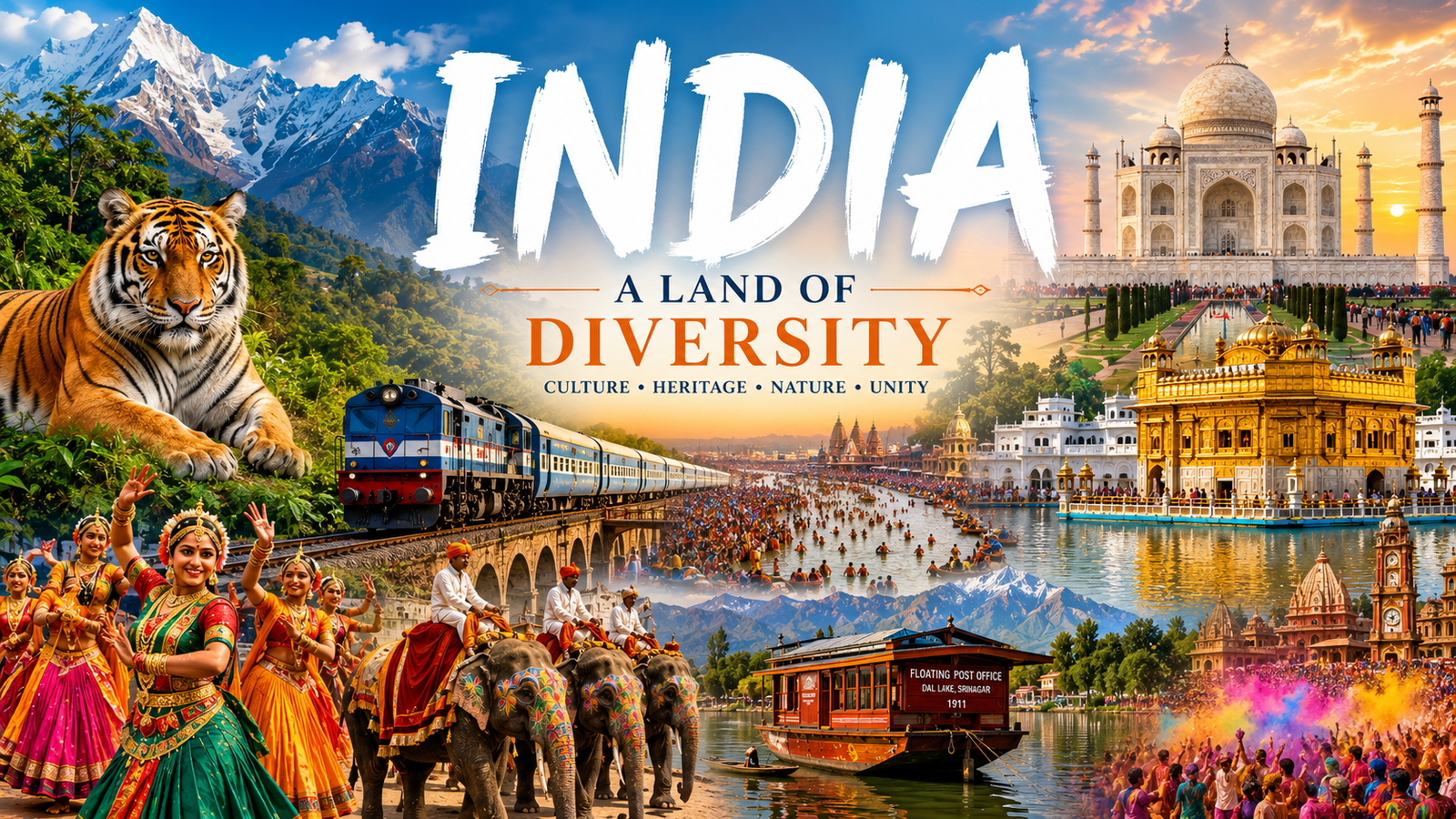
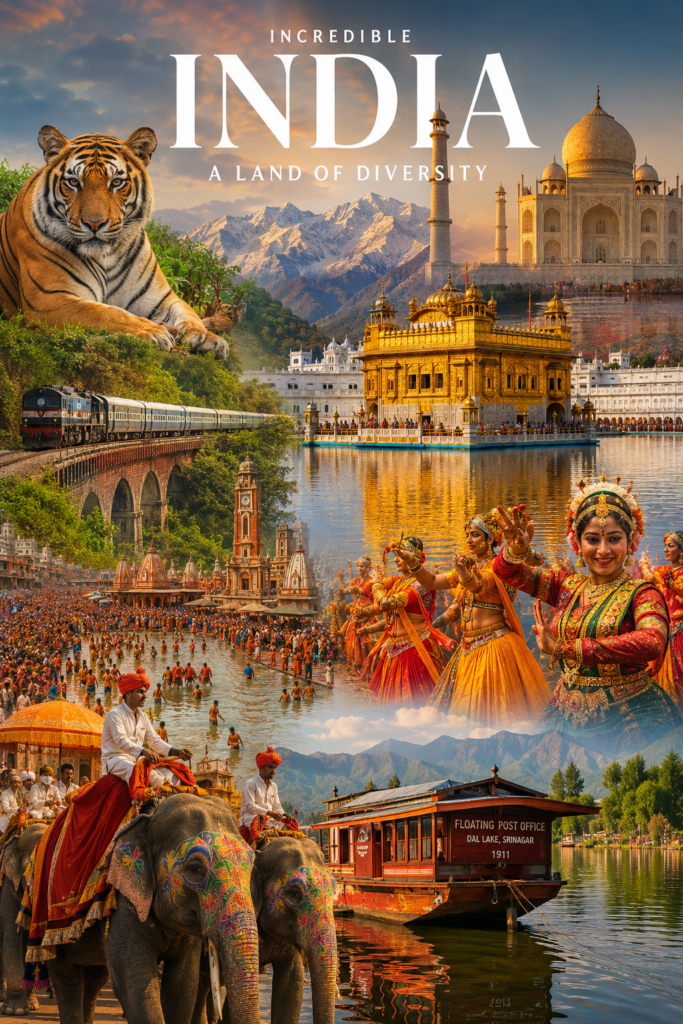
India is a country that constantly surprises people, no matter how much they think they know about it. Stretching from the snow-covered Himalayas in the north to the tropical shores of the Indian Ocean in the south, India is a land where ancient traditions coexist with cutting-edge technology. It is often described as a subcontinent rather than just a country because of its immense geographical, cultural, linguistic, and historical diversity. Every state, city, and village has its own unique customs, foods, festivals, and stories that contribute to India’s rich identity.
What makes India truly fascinating is the way it balances its ancient heritage with modern innovation. While the country is home to temples that are thousands of years old, it is also a global leader in information technology, space exploration, and digital transformation. The Indian Space Research Organisation (ISRO), for example, has gained worldwide recognition for accomplishing ambitious space missions at remarkably low costs. This blend of old and new creates a unique national character that captivates travelers, historians, and researchers alike.
India’s population exceeds 1.4 billion people, making it the most populous country in the world. Despite such a vast population, the nation continues to preserve hundreds of cultural traditions and languages. Whether it is the vibrant festivals, architectural wonders, culinary diversity, or scientific achievements, India offers countless amazing facts that many people outside the country have never heard of. Exploring these lesser-known facts reveals just how extraordinary India truly is.
India Is Home to One of the World’s Oldest Civilizations
India’s history stretches back thousands of years, making it one of the oldest continuously inhabited regions on Earth. Long before many modern nations existed, sophisticated communities flourished in the Indian subcontinent. Archaeological discoveries have revealed evidence of advanced urban planning, trade networks, and social organization dating back several millennia. This ancient heritage has played a significant role in shaping global culture, commerce, science, and philosophy.
Unlike many ancient civilizations that disappeared entirely, India’s cultural continuity remains remarkably intact. Ancient traditions, philosophies, and practices continue to influence daily life across the country. Concepts such as yoga, meditation, and spiritual inquiry originated in India and have spread worldwide. Sacred texts, philosophical schools, and cultural practices developed thousands of years ago still remain relevant to millions today.
The country’s historical legacy extends through multiple eras, including the Vedic period, Mauryan Empire, Gupta Empire, and numerous regional kingdoms. Each contributed unique advancements in governance, science, literature, mathematics, and architecture. This rich historical timeline provides an extraordinary foundation for understanding India’s global influence. Few nations can claim such a long and uninterrupted cultural journey, making India’s ancient civilization one of its most impressive and enduring achievements.
The Legacy of the Indus Valley Civilization
One of the most remarkable chapters in India’s history is the Indus Valley Civilization, which flourished around 3300 BCE to 1300 BCE. Often compared with ancient Egypt and Mesopotamia, this civilization demonstrated astonishing levels of urban sophistication. Cities such as Harappa and Mohenjo-Daro featured well-planned streets, drainage systems, public baths, and standardized construction methods that were far ahead of their time.
Archaeologists continue to be amazed by the engineering skills displayed in these ancient cities. The drainage systems were so advanced that many modern settlements could learn from their efficiency. Houses were often connected to covered drains, showing an understanding of sanitation and urban planning rarely seen in ancient societies. These innovations indicate a highly organized and prosperous civilization.
Trade was another major strength of the Indus Valley people. Evidence suggests that they maintained commercial relationships with regions as far away as Mesopotamia. Seals, pottery, and artifacts found across different archaeological sites demonstrate a thriving economy supported by agriculture and commerce. Although many aspects of this civilization remain mysterious, its achievements continue to highlight India’s deep historical roots and its contribution to human progress.
The World’s Largest Democracy
India proudly holds the title of the world’s largest democracy. With over 900 million eligible voters, the country’s democratic system is one of the most ambitious political experiments ever undertaken. Elections involve massive logistical operations that span deserts, mountains, forests, islands, and densely populated cities. The scale of these elections is so immense that it often captures global attention.
The democratic framework established after India’s independence in 1947 has remained remarkably resilient. Citizens participate actively in choosing their representatives at local, state, and national levels. The Indian Constitution, one of the longest written constitutions in the world, provides a strong foundation for governance, rights, and democratic institutions. This commitment to democracy has enabled India to manage extraordinary diversity while maintaining political stability.
India’s democratic success is particularly notable because of its linguistic, religious, and cultural complexity. People from vastly different backgrounds participate in a shared electoral process, demonstrating the strength of democratic values across the nation. The ability to conduct peaceful elections on such a massive scale remains one of India’s most impressive accomplishments.
How India’s Elections Break Global Records
Conducting elections in India is unlike anything else in the world. The Election Commission of India often deploys millions of officials and security personnel to ensure fair voting. Polling stations are established in some of the most remote locations imaginable, including mountain villages, dense forests, and isolated islands.
One fascinating rule requires that no voter should have to travel excessively far to cast a ballot. As a result, polling stations are sometimes set up for just a handful of voters. In certain cases, election workers trek through difficult terrain for days to reach remote communities. These efforts reflect India’s determination to ensure universal democratic participation.
Electronic Voting Machines (EVMs) have also streamlined the voting process. Their widespread use has significantly reduced counting time and improved efficiency. The sheer scale of Indian elections regularly earns recognition as one of the greatest logistical exercises in human history, showcasing the country’s commitment to democratic principles.
A Land of Hundreds of Languages
India’s linguistic diversity is among the most extraordinary in the world. The country recognizes 22 official languages under its Constitution, but the total number of languages and dialects spoken across India exceeds 19,500 according to census data. This remarkable variety reflects centuries of cultural evolution and regional development.
Traveling across India can sometimes feel like crossing multiple countries. Each region has its own linguistic identity, literature, traditions, and artistic expressions. Languages such as Hindi, Bengali, Tamil, Telugu, Marathi, Kannada, Malayalam, Gujarati, and Punjabi have rich literary histories spanning centuries. Ancient texts, poetry, and philosophical works have been preserved in many of these languages.
This linguistic richness contributes significantly to India’s cultural vibrancy. Despite the presence of so many languages, people often communicate across linguistic boundaries using multiple languages in daily life. Multilingualism is common, and many Indians comfortably switch between different languages depending on the context.
Linguistic Diversity Beyond Imagination
India’s language landscape is so extensive that some languages are spoken by millions, while others survive within small communities. This creates a fascinating mosaic of communication and cultural expression. The southern states, for example, feature Dravidian languages with distinct origins and histories compared to many northern languages.
Ancient languages like Sanskrit continue to influence modern Indian languages and religious practices. Tamil, one of the world’s oldest living languages, boasts a literary tradition dating back more than two thousand years. Such linguistic continuity is rare and demonstrates India’s commitment to preserving cultural heritage.
The coexistence of thousands of linguistic traditions highlights India’s remarkable adaptability and inclusiveness. Language serves not only as a means of communication but also as a repository of history, identity, and collective memory, making India’s linguistic diversity one of its greatest treasures.
India Has the Largest Postal Network in the World
India operates the largest postal network in the world, with more than 150,000 post offices spread across the country. This extensive system connects urban centers with remote villages, ensuring communication and essential services reach millions of people.
The Indian postal service plays a crucial role beyond delivering letters and parcels. It provides banking services, insurance products, and financial inclusion opportunities to rural communities. In many villages, the local post office serves as an essential lifeline connecting residents to government programs and economic opportunities.
Managing such a vast network requires remarkable organization and dedication. Postal workers often travel through challenging terrain to deliver services. Their efforts demonstrate the importance of public infrastructure in a country as geographically diverse as India.
Postal Services Reaching Remote Regions
Some Indian post offices operate under extraordinary conditions. The highest post office in the world is located in Hikkim, Himachal Pradesh, at an altitude of over 14,000 feet. Despite harsh weather and difficult terrain, postal services continue to function reliably.
Remote villages in mountainous regions, desert areas, and island territories depend heavily on postal connectivity. In many cases, postal workers become trusted members of local communities, helping residents access financial and administrative services.
This dedication to reaching every corner of the country reflects India’s commitment to inclusion and accessibility. The postal network remains a powerful symbol of national connectivity and public service.
The Origin of Important Mathematical Concepts
India’s contribution to mathematics has shaped the way the modern world calculates, measures, and understands numbers. Many people use mathematical concepts every day without realizing that some of the most fundamental ideas originated in ancient India. Long before calculators, computers, and smartphones existed, Indian scholars were developing sophisticated mathematical theories that would eventually influence civilizations across Asia, the Middle East, and Europe.
Ancient Indian mathematicians viewed mathematics not merely as an academic subject but as a practical tool for astronomy, architecture, trade, and philosophy. Their work emerged from a culture deeply interested in understanding patterns, measurements, and the structure of the universe. This intellectual curiosity produced breakthroughs that remain central to modern mathematics. The influence of these discoveries can be seen in everything from engineering and banking to computer programming and artificial intelligence.
What makes India’s mathematical heritage particularly remarkable is the level of sophistication achieved centuries ago. Scholars developed methods for solving equations, calculating astronomical movements, and understanding numerical relationships with impressive accuracy. Their writings demonstrate a deep understanding of arithmetic, geometry, algebra, and trigonometry. These achievements were not isolated discoveries but part of a long tradition of scientific inquiry that encouraged innovation and critical thinking.
Today, historians of science widely recognize India’s role in laying the foundation for many modern mathematical systems. Without these contributions, technological advancement would have followed a very different path. The story of Indian mathematics serves as a reminder that knowledge evolves through the collective efforts of civilizations across generations. India’s legacy in this field remains one of its most significant gifts to humanity.
Zero, Decimal System, and Ancient Scholars
Perhaps the most famous mathematical contribution from India is the concept of zero as a number. While various ancient cultures used symbols to indicate absence, Indian mathematicians transformed zero into a fully functional mathematical entity. This breakthrough revolutionized numerical calculations and became the cornerstone of modern mathematics. Without zero, modern computing, engineering, and financial systems would be nearly impossible.
The decimal place-value system, which is used globally today, also originated in India. This system allows numbers to be represented efficiently and enables complex calculations with relative simplicity. Ancient Indian scholars such as Aryabhata, Brahmagupta, and Bhaskara II made substantial contributions to mathematical knowledge. Brahmagupta, in particular, established rules for arithmetic involving zero and negative numbers, concepts that were revolutionary for his time.
The impact of these innovations spread far beyond India. Through trade and scholarly exchanges, Indian mathematical ideas reached the Islamic world and later Europe, where they became integrated into global scientific development. Historians often describe the Hindu-Arabic numeral system as one of the most transformative inventions in human history.
The next time you use a calculator, enter a password, check your bank balance, or browse the internet, you’re benefiting from mathematical foundations that can be traced back to ancient India. Few contributions have had such a profound and lasting impact on civilization.
India’s Remarkable Contributions to Medicine
India’s medical heritage extends back thousands of years and represents one of the oldest continuously practiced healing traditions in the world. Ancient Indian physicians developed comprehensive systems of diagnosis, treatment, surgery, and preventive healthcare long before many modern medical institutions existed. These traditions emphasized the balance between physical health, mental well-being, and environmental harmony.
One of the most fascinating aspects of Indian medicine is its holistic perspective. Rather than focusing solely on treating symptoms, practitioners often sought to understand the underlying causes of illness. This approach encouraged attention to diet, lifestyle, mental health, and preventive care. Many of these principles continue to resonate with modern healthcare trends that emphasize wellness and disease prevention.
Ancient Indian medical texts contain detailed observations about anatomy, pharmacology, surgery, and patient care. Scholars documented hundreds of medicinal plants and developed sophisticated therapeutic techniques. Their writings reveal a systematic approach to understanding the human body and its functions. These medical traditions evolved through centuries of observation, experimentation, and practical application.
The influence of Indian medicine has spread worldwide. Practices such as yoga, meditation, herbal therapies, and holistic wellness programs have gained international popularity. Scientific research continues to explore the benefits of many traditional Indian healthcare approaches. This enduring relevance demonstrates the depth and sophistication of India’s medical knowledge.
Ayurveda and Ancient Surgical Practices
Ayurveda, often referred to as the “science of life,” originated in India more than 3,000 years ago. It remains one of the world’s oldest healthcare systems and continues to be practiced by millions. Ayurveda emphasizes maintaining balance within the body through nutrition, herbal remedies, exercise, meditation, and lifestyle management. Rather than simply treating illness, it focuses on achieving overall well-being.
Ancient Indian surgery was equally impressive. The physician Sushruta, often called the “Father of Surgery,” described numerous surgical procedures in the Sushruta Samhita, an influential medical text. His writings included detailed instructions on surgical instruments, wound management, fracture treatment, and reconstructive procedures. Historians credit Sushruta with performing early forms of plastic surgery centuries before similar techniques became common elsewhere.
The sophistication of these medical practices demonstrates the advanced scientific thinking present in ancient India. Surgeons used specialized instruments, developed training methods, and documented clinical observations with remarkable precision. Their work laid important foundations for future medical developments.
Today, Ayurveda and modern medicine often coexist in India, offering patients diverse healthcare options. This blend of ancient wisdom and contemporary science reflects India’s unique ability to preserve traditional knowledge while embracing innovation.
The World’s Highest Cricket Stadium
Cricket is often described as more than just a sport in India—it is a cultural phenomenon. Among the country’s many cricketing landmarks, one fact stands out as particularly fascinating: India is home to the world’s highest cricket stadium. Located in Chail, Himachal Pradesh, the stadium sits at an altitude of approximately 2,444 meters (8,018 feet) above sea level.
Built in 1893 by Maharaja Bhupinder Singh of Patiala, the stadium required the leveling of a hilltop to create a playing surface. The project demonstrated extraordinary engineering ambition, especially considering the technological limitations of the era. Surrounded by dense forests and breathtaking mountain scenery, the venue remains one of the most picturesque sports grounds anywhere in the world.
The stadium’s location provides a unique playing experience. Athletes compete amid cool mountain air and panoramic views that make every match memorable. Even visitors who are not cricket fans often find themselves captivated by the natural beauty of the setting. The venue serves as both a sporting landmark and a tourist attraction.
India’s passion for cricket is reflected in countless records, achievements, and iconic venues. The Chail Cricket Ground symbolizes this enthusiasm while showcasing the country’s ability to create remarkable infrastructure in challenging environments. It remains a testament to India’s sporting heritage and architectural ingenuity.
The Floating Post Office of Kashmir
Among the many unusual attractions found in India, the floating post office on Srinagar’s Dal Lake is one of the most unique. Established in 2011 within a traditional houseboat, it combines practical postal services with cultural tourism. Visitors can send letters, purchase stamps, and learn about local history while floating peacefully on one of Kashmir’s most famous lakes.
Dal Lake has long been known for its stunning scenery and vibrant houseboat culture. The floating post office adds another layer of charm to this iconic destination. Painted in traditional colors and designed to reflect local architectural styles, it attracts tourists from around the world who are eager to experience something truly distinctive.
The facility functions as a working post office while also serving as a small museum. Exhibits showcase the history of postal services in the region and highlight the role communication has played in connecting communities. This combination of functionality and cultural preservation makes the floating post office especially memorable.
In a world increasingly dominated by digital communication, the floating post office offers a nostalgic reminder of handwritten letters and personal correspondence. It stands as a symbol of India’s creativity and ability to adapt public services to unique geographical settings.
India’s Unique Wildlife and Biodiversity
India is recognized as one of the world’s megadiverse countries, meaning it contains an exceptionally high level of biodiversity. Despite occupying only about 2.4% of the Earth’s land area, India supports approximately 8% of all recorded species. This remarkable concentration of life is the result of the country’s varied climates, ecosystems, and geographical features.
From the Himalayan mountains to tropical rainforests, deserts, wetlands, mangroves, and coastal regions, India offers habitats for an extraordinary range of plants and animals. National parks and wildlife sanctuaries protect many of these species while promoting conservation and ecological research. These protected areas have become important destinations for nature enthusiasts and wildlife photographers.
India’s biodiversity also plays a critical role in supporting local communities and ecosystems. Forests regulate climate, rivers provide freshwater, and pollinators contribute to agricultural productivity. Protecting biodiversity is therefore essential not only for conservation but also for economic and social well-being.
The country’s commitment to wildlife preservation has produced notable successes, particularly in the protection of endangered species. Conservation initiatives continue to expand, helping ensure that future generations can experience India’s incredible natural heritage.
Rare Species Found Only in India
India is home to numerous species found nowhere else on Earth. These endemic animals and plants contribute to the country’s ecological uniqueness and scientific importance. One of the most famous examples is the lion-tailed macaque, a rare primate native to the Western Ghats. Its distinctive silver mane and limited habitat make it a symbol of conservation efforts.
Another remarkable species is the Nilgiri tahr, a mountain-dwelling ungulate found in southern India’s high-altitude grasslands. The purple frog, discovered relatively recently, spends most of its life underground and possesses a highly unusual appearance. Such species highlight the evolutionary diversity present within India’s ecosystems.
India is also home to the largest population of wild tigers in the world. According to recent conservation reports, tiger numbers have increased significantly due to dedicated protection programs and habitat management. This achievement is frequently cited as one of the world’s most successful wildlife conservation stories.
The existence of these unique species underscores the global importance of preserving India’s natural environments. Every protected forest and wildlife reserve contributes to safeguarding irreplaceable forms of life that enrich our understanding of the natural world.
The Kumbh Mela Seen From Space
Few gatherings on Earth can match the sheer scale of the Kumbh Mela, a Hindu pilgrimage that takes place at rotating locations across India. This event is often described as the largest peaceful gathering of people in human history. During major Kumbh Mela celebrations, tens of millions of pilgrims travel from different parts of India and around the world to participate in sacred rituals and take a ceremonial dip in holy rivers.
The scale of the event is so extraordinary that satellite images have captured the massive temporary city created for pilgrims. Reports from various Kumbh Mela celebrations indicate attendance figures that can exceed 100 million visitors over the course of the festival. On peak bathing days alone, crowds can reach numbers larger than the populations of many countries. This remarkable concentration of people requires extensive planning, infrastructure, security, sanitation systems, healthcare facilities, and transportation networks.
What makes the Kumbh Mela particularly fascinating is that it is not merely a religious event. It is also a cultural phenomenon that showcases India’s organizational capabilities, spiritual traditions, and social diversity. Pilgrims from different linguistic, economic, and cultural backgrounds gather with a shared sense of purpose. Temporary bridges, roads, water systems, and accommodations are constructed to support the influx of visitors.
The event demonstrates India’s ability to coordinate one of the most complex logistical operations in the world. Urban planners, public health experts, and researchers often study the Kumbh Mela because of its unique challenges and innovative solutions. It remains one of the most astonishing examples of large-scale human organization ever witnessed.
India’s Incredible Railway Network
India’s railway system is more than just a transportation network; it is one of the country’s most important lifelines. Stretching across more than 68,000 kilometers of track, Indian Railways connects major cities, remote villages, industrial centers, and tourist destinations. Every day, millions of passengers rely on trains to travel for work, education, business, and leisure.
The history of Indian Railways dates back to 1853 when the first passenger train ran between Mumbai and Thane. Since then, the network has expanded into one of the largest railway systems in the world. Trains pass through deserts, mountains, forests, coastal regions, and densely populated urban centers, providing affordable transportation to people from all walks of life.
One of the most impressive aspects of Indian Railways is its scale of operation. Thousands of trains run daily, transporting millions of passengers and vast quantities of freight. The network plays a crucial role in supporting economic growth by facilitating trade, tourism, and regional connectivity. It helps bridge geographical distances and promotes national integration across a country known for its immense diversity.
The railway system is also undergoing significant modernization. High-speed corridors, electrification projects, digital ticketing platforms, and upgraded stations are transforming passenger experiences. Despite embracing modern technology, Indian Railways retains a unique cultural significance that makes train travel an unforgettable part of the Indian experience.
One of the Largest Employers on Earth
Indian Railways is not only a transportation giant but also one of the world’s largest employers. With a workforce exceeding one million employees, it ranks among the biggest organizations globally. This vast workforce includes engineers, station managers, ticket inspectors, drivers, technicians, maintenance crews, administrative staff, and many others.
Managing such a large organization requires extraordinary coordination and expertise. Employees work around the clock to ensure trains operate safely and efficiently across thousands of routes. Their responsibilities range from maintaining tracks and signaling systems to assisting passengers and managing freight logistics. The complexity of these operations highlights the organizational strength behind India’s railway infrastructure.
The railway system has also contributed significantly to employment generation and skill development. Generations of families have built careers within Indian Railways, making it an important institution in the country’s social and economic landscape. Its workforce reflects the diversity of India itself, bringing together individuals from various regions and backgrounds.
As modernization efforts continue, Indian Railways remains committed to improving efficiency while creating new opportunities for innovation and professional growth. Its role as a major employer further reinforces its importance in India’s national development.
The Golden Temple Feeds Thousands Daily
The Golden Temple, or Harmandir Sahib, located in Amritsar, Punjab, is one of India’s most revered religious sites. Known for its stunning architecture and spiritual significance, the temple attracts millions of visitors every year. Beyond its visual beauty, however, the Golden Temple is famous for something equally remarkable: its massive community kitchen, known as the Langar.
The Langar operates on the principle of equality and service. Every visitor, regardless of religion, nationality, social status, or economic background, is welcome to receive a free meal. Volunteers prepare, cook, and serve food continuously throughout the day. This tradition reflects the Sikh values of compassion, humility, and community support.
What makes the Langar extraordinary is its scale. On an average day, the kitchen serves tens of thousands of meals. During festivals and special occasions, that number can rise dramatically, sometimes exceeding 100,000 meals in a single day. The operation relies heavily on donations and volunteer efforts, demonstrating the power of collective generosity.
A Remarkable Example of Community Service
The logistics behind the Golden Temple’s kitchen are astonishing. Huge quantities of flour, vegetables, rice, lentils, and cooking oil are processed daily to meet demand. Volunteers work in shifts, chopping vegetables, kneading dough, washing utensils, and serving meals to visitors seated side by side on the floor.
This arrangement eliminates social distinctions and reinforces the principle that all people are equal. The experience leaves a lasting impression on visitors because it combines hospitality with a powerful social message. Many travelers consider participating in the Langar one of the most meaningful experiences during their visit to India.
The Golden Temple demonstrates how faith can inspire large-scale humanitarian service. Its kitchen has become an international symbol of selfless community support and inclusive values. Few institutions anywhere in the world provide free meals on such a consistent and massive scale.
Conclusion
India is a country filled with astonishing stories, achievements, and cultural treasures that often surprise even seasoned travelers and historians. From being home to one of the world’s oldest civilizations to pioneering mathematical concepts like zero, India’s influence on global history is profound and enduring. Its democratic system, linguistic diversity, medical traditions, and engineering accomplishments showcase a civilization that has continuously evolved while preserving its heritage.
The country’s remarkable facts extend beyond history and science. The floating post office of Kashmir, the world’s highest cricket stadium, the massive railway network, and the Golden Temple’s community kitchen illustrate India’s creativity, resilience, and commitment to serving its people. These examples reveal a nation where innovation and tradition coexist in fascinating ways.
India’s biodiversity, spiritual gatherings, and cultural diversity add even more layers to its uniqueness. Whether viewed through the lens of history, technology, nature, or human achievement, India offers countless examples of ingenuity and wonder. Each fact tells a story about the people, ideas, and values that have shaped one of the world’s most influential civilizations.
Exploring these amazing facts helps us appreciate not only India’s extraordinary past but also its continuing role in shaping the future. It is a country that consistently challenges expectations and rewards curiosity, making it one of the most fascinating places on Earth.
FAQs
1. Why is India called the world’s largest democracy?
India is called the world’s largest democracy because it has over 900 million eligible voters who participate in local, state, and national elections. The scale of these elections is unmatched anywhere else in the world.
2. Did the concept of zero really originate in India?
Yes. Ancient Indian mathematicians developed zero as a mathematical number and established rules for its use. This innovation became a foundation of modern mathematics and computing.
3. What is unique about India’s postal network?
India has the largest postal network in the world, with more than 150,000 post offices serving urban and remote rural areas, including mountain villages and isolated regions.
4. Why is the Kumbh Mela famous worldwide?
The Kumbh Mela is famous because it is the largest peaceful gathering of people on Earth, attracting tens of millions of pilgrims during each festival cycle.
5. What makes the Golden Temple’s Langar special?
The Langar serves free meals to everyone regardless of religion, nationality, or social status. It feeds tens of thousands of people daily and is one of the largest community kitchens in the world.
| All Courses | View List | Enroll Now |
| Mock Tests/Quizzes | View All |
| Student Registration | Register Now |
| Become an Instructor | Apply Now |
| Dashboard | Click Here |
| Student Zone | Click Here |
| Our Team | Meet the Members |
| Contact Us | Get in Touch |
| About Us | Read More |
| Knowledge Base | Click Here |
| Classes/Batches: Class 6th to 12th, BA, B.Sc, B.Com (All Subjects) — Online & Offline Available | Click Here |
| Exam Preparation: SSC, Railway, Police, Banking, TET, UPTET, CTET, and More | Click Here |
| Shree Narayan Computers & Education Center | Home Page |