
GST Return Filing Guide: GSTR-1, GSTR-3B Explained
Understanding GST Returns in India
What is a GST Return?
If you’ve ever run a business or even considered starting one in India, you’ve probably heard the term GST return thrown around quite a bit. But what does it actually mean in practical terms? Think of a GST return as a detailed report you submit to the government that summarizes your business transactions over a specific period. It includes information about your sales, purchases, tax collected, and tax paid. In simpler words, it’s like giving the tax department a clear snapshot of your business activity.
| All Courses | View List | Enroll Now |
| Mock Tests/Quizzes | View All |
| Student Registration | Register Now |
| Become an Instructor | Apply Now |
| Dashboard | Click Here |
| Student Zone | Click Here |
| Our Team | Meet the Members |
| Contact Us | Get in Touch |
| About Us | Read More |
| Knowledge Base | Click Here |
| Classes/Batches: Class 6th to 12th, BA, B.Sc, B.Com (All Subjects) — Online & Offline Available | Click Here |
| Exam Preparation: SSC, Railway, Police, Banking, TET, UPTET, CTET, and More | Click Here |
| Shree Narayan Computers & Education Center | Home Page |
Now here’s where things get interesting—GST returns aren’t just about compliance; they directly impact your cash flow and credibility. When you file returns accurately, you ensure that your Input Tax Credit (ITC) is correctly claimed, which can significantly reduce your tax liability. On the flip side, errors or delays can lead to penalties, interest, and even notices from tax authorities.
GST returns are filed electronically through the official GST portal, making the process relatively streamlined compared to older tax systems. However, “streamlined” doesn’t mean “simple.” There are multiple types of returns, each serving a specific purpose, and understanding them is key to staying compliant.
What makes GST returns particularly important is the concept of transparency. Every transaction you report is matched with your buyer’s or supplier’s data. So, if there’s even a small mismatch, it can raise a red flag. This interconnected system is designed to reduce tax evasion but also demands a higher level of accuracy from businesses.
Why GST Return Filing is Mandatory
You might wonder—why is there so much emphasis on filing GST returns on time? The answer lies in how the GST system is structured. It operates on a self-assessment mechanism, which means the government relies heavily on businesses to report their own transactions honestly and accurately.
Filing GST returns is not optional if you’re registered under GST. Even if there’s no business activity during a period, you’re still required to file a nil return. Skipping this responsibility can quickly snowball into bigger issues, including hefty fines and restrictions on your GST registration.
One major reason GST return filing is mandatory is to maintain the flow of input tax credit across the supply chain. Imagine a chain reaction—when you file your return, it allows your buyer to claim ITC. If you fail to file, it disrupts their ability to claim credit, which can damage business relationships and your reputation.
There’s also a compliance rating aspect to consider. Consistent and accurate filing builds trust with tax authorities and business partners. In contrast, irregular filings can trigger audits or inspections, something most businesses would prefer to avoid.
In essence, GST return filing isn’t just a regulatory burden—it’s a critical part of running a transparent, trustworthy, and financially healthy business. Treat it like a routine health check-up for your business finances. Ignore it, and the consequences can pile up faster than you expect.
Types of GST Returns You Should Know
GSTR-1 – Details of Outward Supplies
When it comes to GST returns, GSTR-1 is where everything begins. This return focuses entirely on your outward supplies, meaning all the sales your business has made during a specific period. It includes invoice-wise details, debit and credit notes, and even exports if applicable.
Think of GSTR-1 as your business’s sales diary. Every transaction you record here becomes visible to your customers in their GST records, allowing them to claim input tax credit. That’s why accuracy is absolutely crucial—one wrong entry can affect not just you but your entire supply chain.
GSTR-1 can be filed either monthly or quarterly, depending on your turnover and whether you’ve opted for the QRMP (Quarterly Return Monthly Payment) scheme. Businesses with a turnover of up to ₹5 crore can choose quarterly filing, which reduces compliance burden.
The structure of GSTR-1 may seem overwhelming at first, with multiple tables for B2B sales, B2C sales, exports, and more. But once you understand the logic behind it, it becomes manageable. Each section is designed to capture specific types of transactions, ensuring that nothing slips through the cracks.
Who Needs to File GSTR-1
Not every taxpayer has the same GST obligations, but most registered businesses are required to file GSTR-1. This includes regular taxpayers, casual taxable persons, and even those involved in e-commerce (with some exceptions).
However, there are certain categories that are exempt from filing GSTR-1. For example, composition scheme taxpayers file different returns, and non-resident taxable persons have their own set of compliance requirements. Knowing where you fall is essential because filing the wrong return can lead to complications.
If your business makes taxable supplies, you’re almost certainly required to file GSTR-1. Even if you haven’t made any sales during a period, you still need to submit a nil return. Skipping it is not an option.
What’s often overlooked is the importance of timely filing. Delays can lead to late fees and also prevent your buyers from claiming ITC. In competitive markets, this can become a serious disadvantage, as clients prefer working with compliant vendors.
GSTR-3B – Summary Return
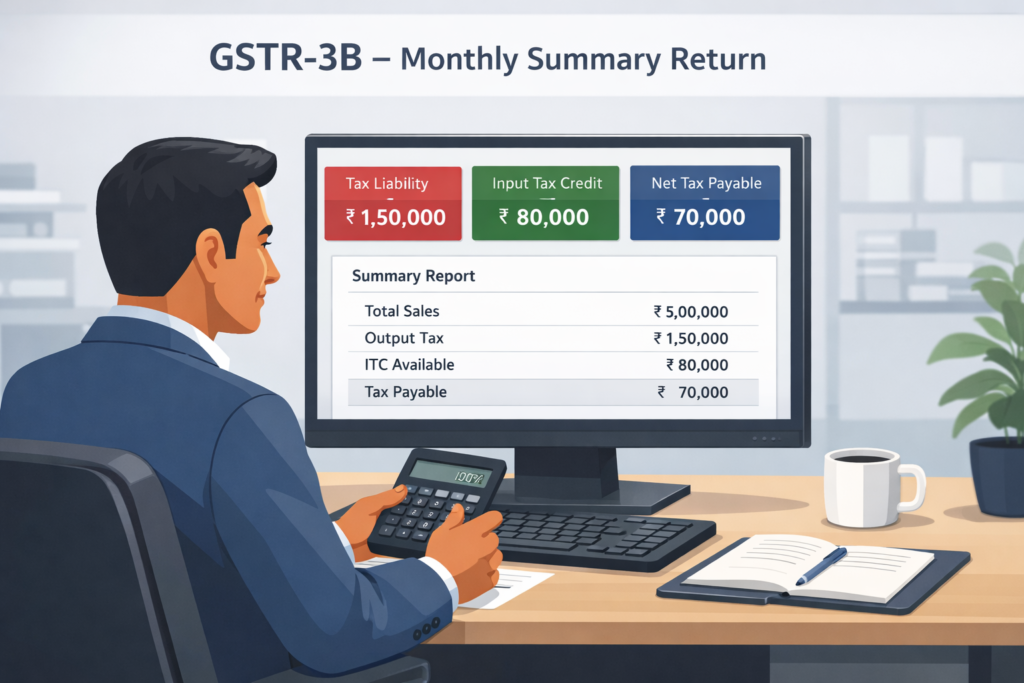
If GSTR-1 is your detailed sales record, then GSTR-3B is the summarized version of your entire GST activity. It’s a monthly return that provides a consolidated view of your sales, purchases, input tax credit, and tax liability.
GSTR-3B is crucial because it’s where you actually pay your taxes. While GSTR-1 reports your sales data, GSTR-3B determines how much tax you owe after adjusting for input tax credit. This makes it one of the most important returns in the GST framework.
Unlike GSTR-1, GSTR-3B doesn’t require invoice-level details. Instead, it focuses on aggregated figures, making it relatively simpler to file. However, “simpler” doesn’t mean less important. Any discrepancy between GSTR-1 and GSTR-3B can lead to notices and scrutiny from tax authorities.
The return includes sections for outward supplies, inward supplies liable to reverse charge, ITC claimed, and tax payment details. Each section plays a critical role in ensuring that your tax liability is calculated accurately.
Key Components of GSTR-3B
To truly understand GSTR-3B, you need to break it down into its key components. The form is structured to capture all essential aspects of your GST liability in a summarized format.
Here’s a quick overview:
| Section | Description |
|---|---|
| 3.1 | Details of outward supplies and tax liability |
| 3.2 | Inter-state supplies |
| 4 | Input Tax Credit (ITC) |
| 5 | Exempt, nil-rated, and non-GST supplies |
| 6 | Payment of tax |
Each section requires careful attention. For example, incorrectly claiming ITC in Section 4 can lead to penalties and interest. Similarly, underreporting sales in Section 3.1 can trigger audits.
What makes GSTR-3B particularly tricky is that it’s often filed before final reconciliation. This means you need to rely on provisional data, which increases the risk of errors. That’s why many businesses invest in accounting software or professional help to ensure accuracy.
Other Important GST Returns
GSTR-9 and GSTR-9C Overview
While GSTR-1 and GSTR-3B handle your regular monthly or quarterly compliance, GSTR-9 and GSTR-9C step in as the annual reality check. Think of them as your business’s year-end report card, where everything you’ve reported throughout the year gets consolidated, reviewed, and validated. These returns are not just about summarizing numbers—they’re about ensuring consistency, accuracy, and transparency across all filings.
GSTR-9 is the annual return that every regular taxpayer must file (subject to turnover thresholds and exemptions notified from time to time). It includes a comprehensive summary of outward and inward supplies, input tax credit claimed, taxes paid, and any adjustments made during the financial year. Filing GSTR-9 forces businesses to reconcile their monthly filings with their audited financial statements. This is where discrepancies often come to light—maybe a missed invoice, an overclaimed ITC, or a reporting mismatch.
Now, here’s where it gets more serious. GSTR-9C is a reconciliation statement that must be certified by a Chartered Accountant (for applicable taxpayers based on turnover limits). It compares the figures reported in GSTR-9 with the audited financial statements. In other words, it’s like having a professional double-check your work before submitting it to the authorities.
Why does this matter so much? Because inconsistencies between your books and GST filings can trigger scrutiny. Authorities rely on GSTR-9C to identify gaps, and even small mismatches can raise questions. Businesses that treat annual returns casually often find themselves dealing with notices later.
The key takeaway here is simple: annual GST returns are not just formalities—they’re your final opportunity to correct, reconcile, and present a clean financial picture. If your monthly filings are messy, GSTR-9 and 9C will expose it.
Due Dates for GST Returns
GSTR-1 Due Dates
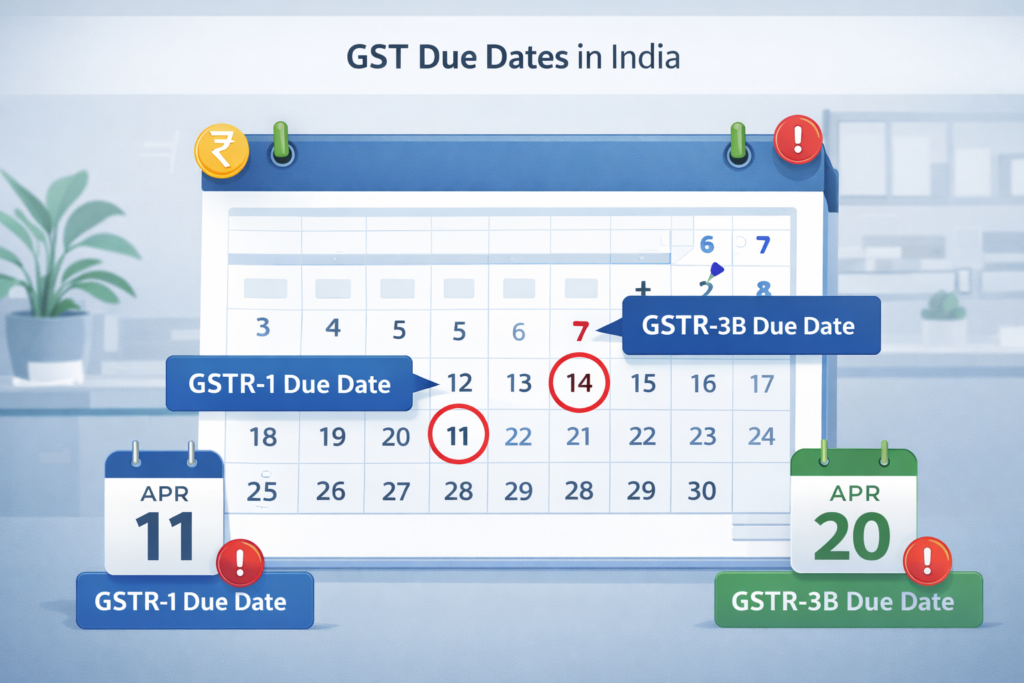
Deadlines in GST compliance are not flexible suggestions—they are strict cutoffs that can impact your finances and reputation. GSTR-1 due dates depend on your filing frequency, which is determined by your turnover and scheme selection.
For businesses filing monthly, GSTR-1 is typically due on the 11th of the following month. If you’ve opted for the QRMP scheme (Quarterly Return Monthly Payment), the due date shifts to the 13th of the month following the quarter. These dates might seem manageable, but they come around faster than expected, especially when you’re juggling multiple business responsibilities.
What makes GSTR-1 deadlines particularly important is their impact on your buyers. If you delay filing, your customers won’t be able to see your invoices in their GSTR-2B, which directly affects their ability to claim ITC. This can strain business relationships and even lead to lost clients.
Many businesses fall into the trap of last-minute filing, which increases the likelihood of errors. A better approach is to maintain real-time records and prepare your data in advance. That way, when the due date arrives, you’re simply uploading verified information instead of scrambling to compile it.
GSTR-3B Due Dates
If GSTR-1 is about reporting, GSTR-3B is about payment—and that makes its due date even more critical. Missing this deadline doesn’t just result in late fees; it also attracts interest on unpaid tax.
The due date for GSTR-3B varies slightly depending on your state and turnover. Generally, it falls on the 20th, 22nd, or 24th of the following month. For QRMP taxpayers, it’s filed quarterly, but tax payments are still made monthly using PMT-06.
What’s crucial to understand is that GSTR-3B is a self-declared return. There’s no automatic validation against GSTR-1 at the time of filing, which means the responsibility for accuracy lies entirely on you. Any mismatch discovered later can lead to notices, penalties, or demands for additional tax.
Businesses often prioritize GSTR-1 and treat GSTR-3B as a secondary task. That’s a mistake. Since GSTR-3B involves actual tax payment, errors here can directly impact your cash flow and compliance status.
Penalties for Late Filing
Let’s be honest—missing a GST deadline is easy, but the consequences are anything but light. Late filing attracts both late fees and interest, and these can add up quickly if delays become frequent.
Here’s a quick breakdown:
| Type | Charges |
|---|---|
| Late Fee | ₹50 per day (₹25 CGST + ₹25 SGST) |
| Nil Return Late Fee | ₹20 per day |
| Interest | 18% per annum on unpaid tax |
What’s more concerning is that late filing can block your ability to file subsequent returns. GST operates on a sequential filing system, meaning you can’t skip one return and move on to the next. This creates a domino effect, where one missed deadline disrupts your entire compliance cycle.
Beyond financial penalties, there’s also the risk of compliance notices and audits. Frequent delays can flag your business as non-compliant, attracting closer scrutiny from tax authorities.
Step-by-Step GST Return Filing Process
Filing GSTR-1 Online
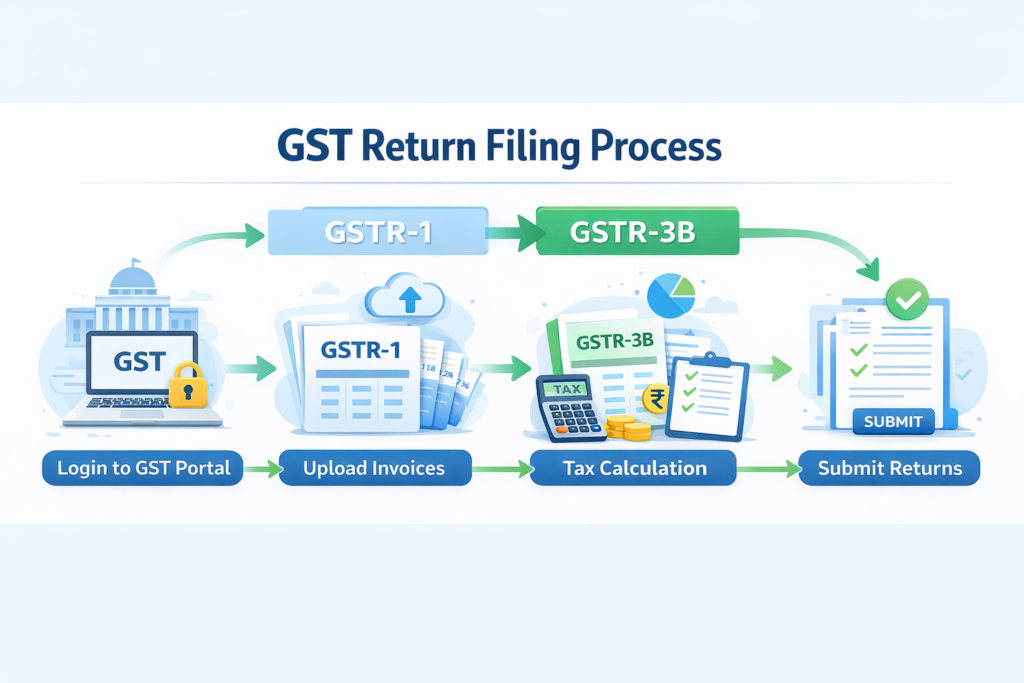
Filing GSTR-1 might seem intimidating at first, but once you understand the workflow, it becomes a structured and manageable process. Everything is done through the GST portal, which acts as your central hub for compliance.
The process typically begins with logging into your GST account and navigating to the return dashboard. From there, you select the relevant financial year and filing period. The portal then presents various sections where you need to enter your sales data.
You can either upload invoices manually or use accounting software to generate a JSON file for bulk upload. This is especially useful for businesses with high transaction volumes. Once the data is uploaded, you need to review it carefully, as errors at this stage can propagate through the system.
After verification, the return is submitted using a Digital Signature Certificate (DSC) or an Electronic Verification Code (EVC). Once filed, the data becomes available to your buyers, enabling them to claim ITC.
The key to smooth GSTR-1 filing lies in preparation. Keeping your invoices organized, reconciling data regularly, and using reliable software can save you from last-minute stress.
Filing GSTR-3B Online
GSTR-3B filing follows a similar digital process but focuses more on summarizing data rather than detailing it. After logging into the GST portal, you select the GSTR-3B return for the relevant period.
The form requires you to enter consolidated figures for sales, purchases, ITC, and tax liability. Unlike GSTR-1, you don’t need to upload invoice-level details. However, this doesn’t mean you can afford to be careless—these numbers must align with your records and GSTR-1 data.
Once the details are entered, the system calculates your tax liability. You can then offset this liability using your electronic credit ledger (ITC) and pay the remaining amount through your cash ledger.
After payment, the return is submitted and filed. It’s important to download and keep a copy for your records, as it serves as proof of compliance.
Common Mistakes in GST Return Filing
Incorrect Invoice Details
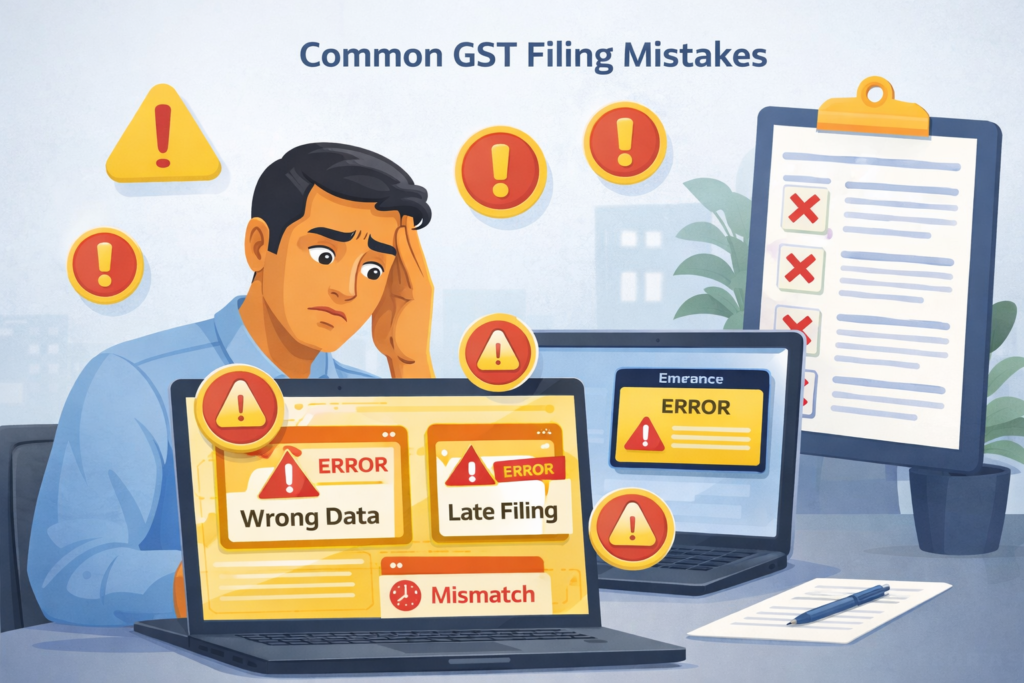
One of the most frequent—and costly—mistakes in GST filing is entering incorrect invoice details. This might seem like a small issue, but in a system where data is cross-verified, even minor errors can create major problems.
For example, a wrong GSTIN, incorrect invoice number, or mismatched taxable value can prevent your buyer from claiming ITC. This not only affects your compliance but can also damage business relationships.
To avoid this, businesses should implement strict invoice validation processes and use automated tools wherever possible.
👉 Learn more: https://www.gst.gov.in/help/invoice-matching
Mismatch Between GSTR-1 and GSTR-3B
Another common issue is the mismatch between GSTR-1 and GSTR-3B. Since GSTR-1 contains detailed data and GSTR-3B is a summary, inconsistencies can easily arise if data isn’t reconciled properly.
Tax authorities closely monitor these mismatches, and significant differences can trigger notices. Regular reconciliation is the only way to ensure consistency.
👉 Reference: https://www.gst.gov.in/
Missing Input Tax Credit Claims
Failing to claim eligible ITC is like leaving money on the table. Many businesses either overlook certain invoices or delay claims beyond the allowed timeframe.
ITC must be claimed within specified deadlines, and missing them means losing out on legitimate tax benefits. Regular review of purchase records and GSTR-2B is essential.
👉 Guide: https://cbic-gst.gov.in/
Ignoring Reconciliation
Reconciliation is often treated as an optional task, but it’s actually a critical part of GST compliance. Without it, errors can go unnoticed until they become serious issues.
Reconciling your books with GST returns ensures that all data aligns and discrepancies are addressed promptly. It’s like balancing your bank account—you wouldn’t skip it, right?
Tips to Avoid GST Filing Errors
Avoiding GST mistakes isn’t about working harder—it’s about working smarter. The most successful businesses treat GST compliance as an ongoing process rather than a last-minute task.
Start by maintaining real-time accounting records. Waiting until the end of the month to update your books increases the risk of errors. Using reliable accounting software can automate much of this work, reducing manual intervention.
Another important tip is to reconcile data regularly. Don’t wait for annual returns to identify discrepancies. Monthly reconciliation helps catch issues early, making them easier to fix.
It’s also wise to stay updated with GST rules and notifications. Tax laws evolve, and staying informed ensures that your compliance practices remain current.
Finally, consider consulting a professional if your business transactions are complex. A small investment in expert advice can save you from costly mistakes down the line.
Conclusion
GST return filing might seem overwhelming at first, but once you understand its structure and purpose, it becomes a manageable part of running a business. From GSTR-1 capturing your sales details to GSTR-3B summarizing your tax liability, each return plays a specific role in maintaining transparency and compliance.
The key lies in consistency, accuracy, and preparation. When you treat GST filing as a routine process rather than a last-minute obligation, you not only avoid penalties but also build a मजबूत and trustworthy business foundation.
FAQs
1. What happens if I don’t file GST returns?
You may face late fees, interest, and even suspension of your GST registration.
2. Can I revise GSTR-1 after filing?
No, but you can make amendments in subsequent returns.
3. Is GSTR-3B mandatory every month?
Yes, unless you are under a specific scheme like QRMP.
4. What is the penalty for late GST filing?
₹50 per day (₹20 for nil returns) plus 18% interest on unpaid tax.
5. Can I file GST returns without a CA?
Yes, but professional help is recommended for complex cases.





Staff picks
Class 11th Commerce UP Board Notes with NCERT Solutions | PDF & MS Word
Original price was: ₹99.00.₹0.00Current price is: ₹0.00.Class 11th Humanities UP Board Notes with NCERT Solutions | PDF & MS Word
Original price was: ₹99.00.₹0.00Current price is: ₹0.00.Class 11th Science UP Board Notes with NCERT Solutions | PDF & MS Word
Original price was: ₹99.00.₹0.00Current price is: ₹0.00.Class 12th Commerce UP Board Notes with NCERT Solutions | PDF & MS Word
Original price was: ₹99.00.₹0.00Current price is: ₹0.00.