
Table of Contents
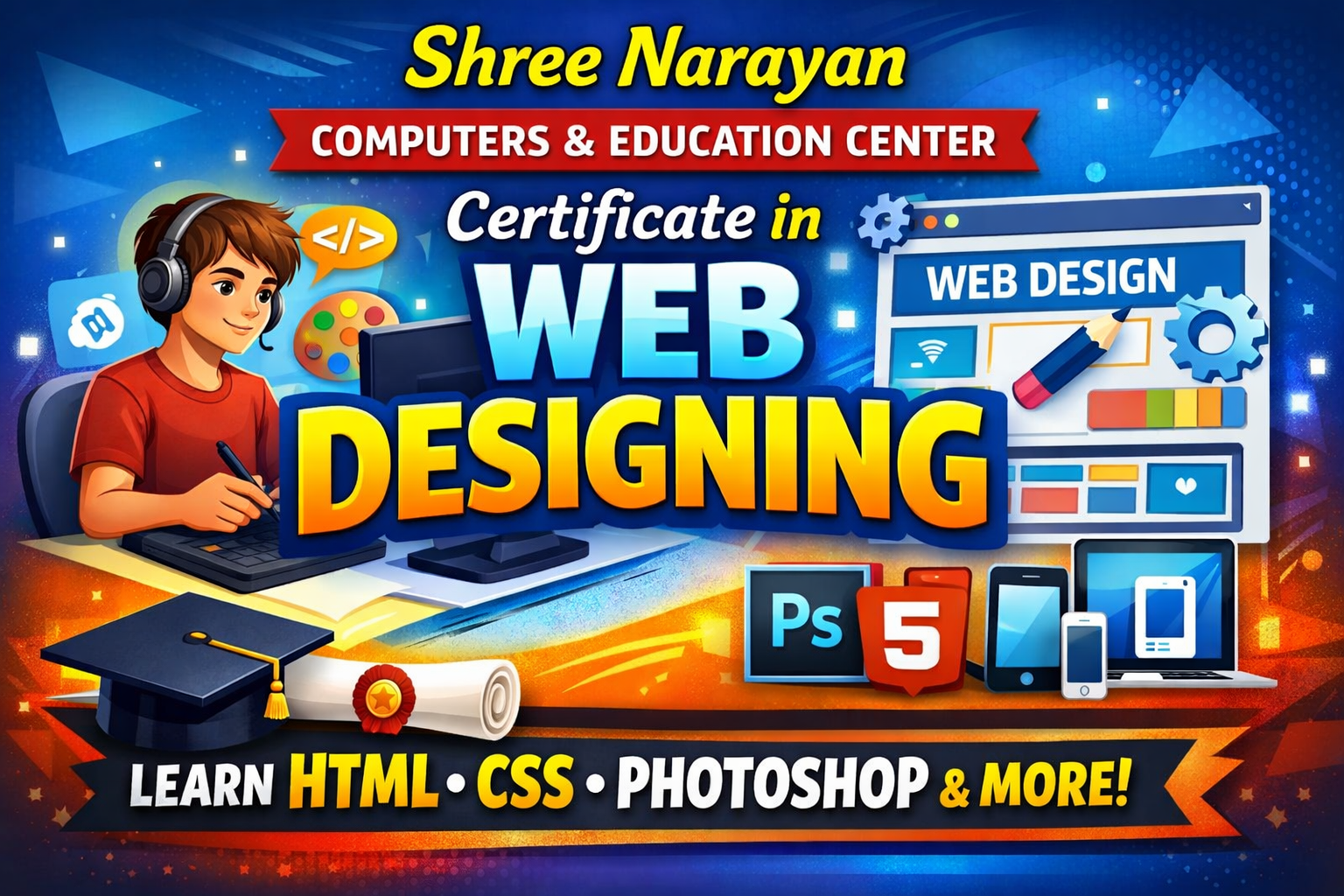
Certificate in Web Designing – Shree Narayan Computers & Education Center
Introduction to Web Designing as a Career
The internet has become the backbone of modern communication, business, and creativity. Every business—from a small local shop to a global corporation—needs an online presence, and that presence begins with a website. This is where web designing plays a crucial role. Web designers are responsible for creating visually appealing, functional, and user-friendly websites that attract visitors and convert them into customers. If you’ve ever wondered who builds those beautiful websites you browse daily, the answer is skilled web designers working behind the scenes.
| All Courses | View List | Enroll Now |
| Mock Tests/Quizzes | View All |
| Student Registration | Register Now |
| Become an Instructor | Apply Now |
| Dashboard | Click Here |
| Student Zone | Click Here | Click Here |
| Our Team | Meet the Members |
| Contact Us | Get in Touch |
| About Us | Read More |
| Knowledge Base | Click Here |
| Classes/Batches: Class 6th to 12th, BA, B.Sc, B.Com (All Subjects) — Online & Offline Available | Click Here |
| Exam Preparation: SSC, Railway, Police, Banking, TET, UPTET, CTET, and More | Click Here |
| Digital Seva Portal (CSC) | Click Here |
| Shree Narayan Computers & Education Center | Home Page |
Choosing a Certificate in Web Designing is often the first step for individuals who want to enter the digital world without spending years in traditional degree programs. Unlike lengthy academic paths, a certificate program focuses on practical skills that employers and clients actually need. Students learn how to structure websites, design layouts, apply colors and typography, and make websites responsive across different devices. With businesses increasingly relying on digital platforms, the demand for skilled web designers continues to grow every year.
One of the biggest advantages of learning web designing is its versatility. You can work as a freelancer, full-time designer, front-end developer, or digital consultant. Many professionals even start their own agencies after gaining experience. The barrier to entry is relatively low compared to other tech careers, but the potential for growth is massive.
Institutions like Shree Narayan Computers & Education Center provide structured training programs that guide beginners through every step of the web design process. From understanding the basics of HTML and CSS to creating full website layouts, such courses make the learning journey practical and accessible. Instead of only studying theory, students build real projects that strengthen their portfolios.
In a world where digital presence determines business success, web designing has become one of the most valuable and future-ready skills you can learn. The right training can transform a curious beginner into a confident professional capable of building websites that shape online experiences.
About Shree Narayan Computers & Education Center
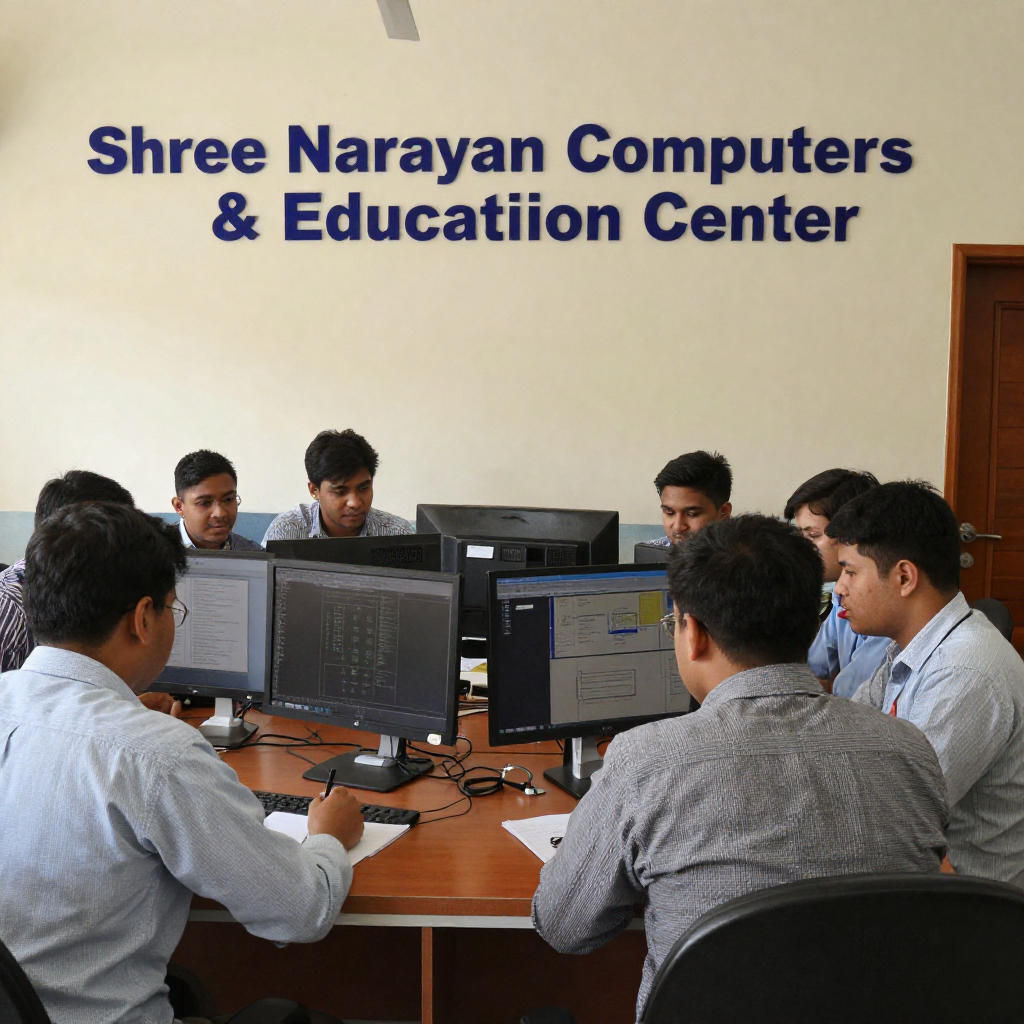
When choosing a training institute, the quality of education and practical exposure matters as much as the course itself. Shree Narayan Computers & Education Center has established itself as a trusted institution for computer education and professional skill development. The center focuses on providing industry-relevant training programs that equip students with the technical knowledge and confidence required to succeed in modern digital careers.
Unlike generic training institutes that rely heavily on outdated syllabi, this education center emphasizes practical learning and updated curriculum. Technology evolves rapidly, especially in fields like web development and digital design. A course that was relevant five years ago might already be obsolete today. Recognizing this challenge, the institute continuously updates its teaching modules so students learn tools and techniques that match current industry standards.
Another factor that makes Shree Narayan Computers & Education Center stand out is its student-focused learning approach. Classes are designed to be interactive and engaging rather than purely lecture-based. Students are encouraged to ask questions, experiment with projects, and develop creative solutions to design challenges. This approach helps learners understand concepts deeply rather than memorizing them superficially.
The institute also aims to bridge the gap between education and employability. Many students struggle to translate theoretical knowledge into real-world skills. By integrating practical assignments and project-based training, the center ensures that students graduate with hands-on experience. A strong portfolio built during the course can significantly improve a student’s chances of landing freelance projects or entry-level jobs.
Beyond technical training, the environment at the center promotes confidence and professional growth. Students interact with instructors who guide them through real scenarios, such as designing websites for businesses or creating user-friendly layouts. These experiences prepare learners for the expectations of clients and employers in the real world.
For anyone interested in starting a career in digital design, enrolling in the Certificate in Web Designing at Shree Narayan Computers & Education Center can be a smart step. The institute combines practical learning, modern tools, and experienced guidance to help students build strong foundations in web design.
Mission and Vision of the Institute
Every successful educational institution operates with a clear purpose, and Shree Narayan Computers & Education Center is no exception. The mission of the institute revolves around empowering individuals with practical digital skills that can transform their career opportunities. In a world increasingly dominated by technology, the center aims to ensure that students from all backgrounds gain access to quality computer education.
The institute’s mission focuses on three primary goals: skill development, career readiness, and technological awareness. Instead of merely teaching software tools, the training programs are designed to develop problem-solving abilities and creative thinking. Students are encouraged to approach web design as both a technical discipline and an artistic craft. This balance helps learners produce websites that are not only functional but also visually appealing.
The vision of the institute extends beyond individual training. Shree Narayan Computers & Education Center aims to contribute to the growth of a digitally skilled workforce. As more businesses move online, the need for web developers, designers, and digital professionals continues to increase. By training students in these areas, the institute plays a role in supporting economic growth and technological advancement.
Another key aspect of the institute’s vision is accessibility. Many aspiring students hesitate to enter the technology field because they believe it requires advanced mathematical or programming skills. The center breaks this misconception by offering beginner-friendly courses that guide students step by step. Even individuals with little or no technical background can gradually develop professional-level skills through structured training.
The institute also emphasizes ethical learning and professional responsibility. Students are taught the importance of creating user-friendly and accessible websites that serve real audiences. This perspective ensures that graduates not only possess technical expertise but also understand the impact of their work on users and businesses.
Through its mission and vision, Shree Narayan Computers & Education Center continues to nurture aspiring web designers who are ready to contribute meaningfully to the digital world.
Modern Training Facilities and Learning Environment
A strong learning environment plays a major role in shaping a student’s educational experience. Shree Narayan Computers & Education Center understands that effective technical training requires more than just textbooks and lectures. To support hands-on learning, the institute provides modern facilities that allow students to practice and experiment with real web design tools.
The classrooms are equipped with updated computer systems and essential design software, enabling students to work on live projects during their training. Instead of simply observing demonstrations, learners actively participate in the creation of websites and digital layouts. This practical approach reinforces theoretical concepts and ensures that students become comfortable with professional tools used in the industry.
Another important element of the learning environment is the interactive teaching methodology. Instructors guide students through step-by-step demonstrations and then encourage them to replicate the process independently. When students encounter challenges, instructors provide personalized guidance to help them overcome obstacles. This supportive environment makes learning less intimidating, especially for beginners entering the field of technology for the first time.
Collaboration is also encouraged within the institute. Students often work on group projects and design challenges, which helps them learn teamwork and creative brainstorming. These activities simulate real workplace situations where designers must collaborate with developers, clients, and marketing teams.
The center also places importance on portfolio development. Throughout the course, students create multiple website projects that demonstrate their skills in layout design, coding, and responsive development. By the end of the program, each student has a portfolio that can be presented to potential employers or freelance clients.
A positive and well-equipped learning environment not only enhances technical skills but also builds confidence. Students leave the institute with practical experience, creative thinking abilities, and a clear understanding of how the web design industry works.
Why Choose a Certificate in Web Designing
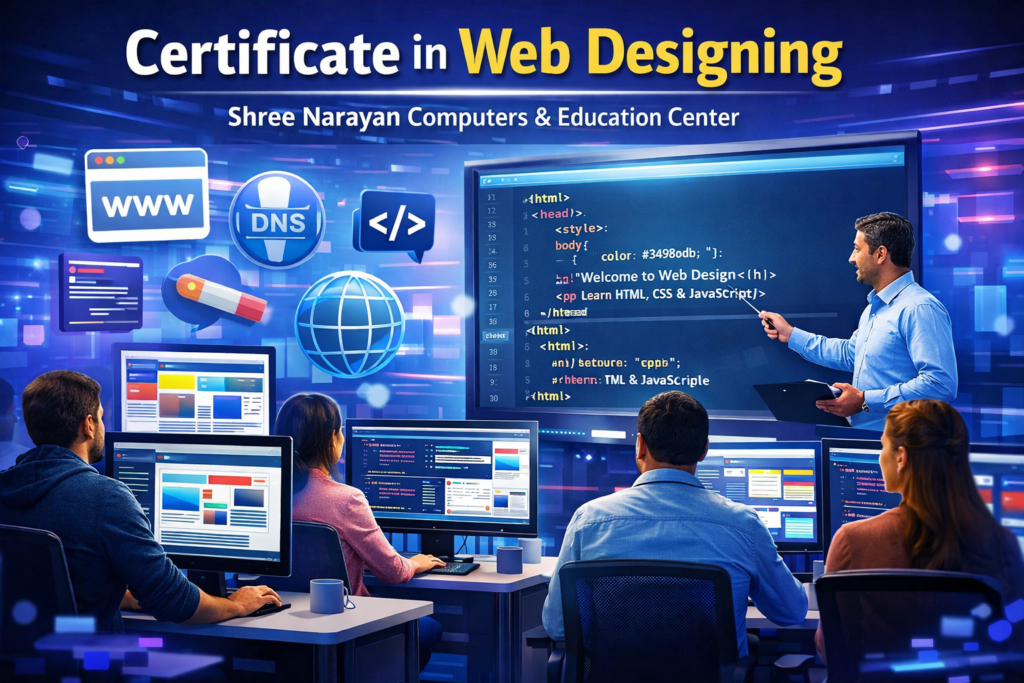
In a world where nearly every business operates online, web design has evolved from a niche skill into a mainstream career opportunity. Choosing a Certificate in Web Designing offers a fast and practical pathway into this growing digital industry. Instead of spending several years in a traditional academic program, students can acquire job-ready skills within a relatively short period of time.
One of the main reasons people choose this certification is the practical nature of the training. The course focuses on real skills such as building website layouts, designing user interfaces, optimizing images, and ensuring responsive design across different devices. These are the same tasks that professional web designers perform daily. By learning these skills early, students gain confidence and experience that can immediately translate into freelance projects or entry-level jobs.
Another advantage is the flexibility of career options. Web design is not limited to a single job title or industry. Designers can work for digital marketing agencies, software companies, startups, or even traditional businesses that need an online presence. Many professionals also choose the freelance route, offering website design services to clients worldwide through online platforms.
The certificate program is particularly appealing for students, entrepreneurs, and career changers who want to enter the tech industry without a complicated learning curve. Web designing combines creativity with technical skills, making it an ideal choice for individuals who enjoy visual design as much as problem solving.
Institutes like Shree Narayan Computers & Education Center structure their programs to make learning approachable and engaging. By focusing on both design principles and coding basics, the course ensures that students understand how websites function from both artistic and technical perspectives.
As businesses continue to invest in digital platforms, skilled web designers remain in high demand. A certificate in web designing can therefore serve as the gateway to a career that is creative, flexible, and filled with opportunities in the digital economy.
Growing Industry Demand for Web Designers
The demand for skilled web designers has increased dramatically over the past decade, and the trend shows no sign of slowing down. As businesses, organizations, and even individuals move their operations online, the need for visually appealing and functional websites continues to grow. A website today is more than just an online brochure; it is often the first impression a customer has of a brand. Because of this, companies are willing to invest in professional designers who can create engaging and user-friendly digital experiences.
According to industry research from sources like the U.S. Bureau of Labor Statistics, employment for web developers and digital designers is projected to grow significantly over the coming years, faster than many other occupations. The reason is simple: every industry now depends on the internet. From healthcare and education to retail and entertainment, organizations require websites that are not only informative but also visually attractive and easy to navigate.
Another factor driving the demand for web designers is the rapid growth of mobile internet usage. With billions of people accessing websites through smartphones and tablets, companies must ensure their websites are responsive and adaptable to different screen sizes. This requires designers who understand responsive design principles, modern layout techniques, and user experience optimization.
Small businesses are also fueling the demand. In the past, only large corporations invested heavily in professional websites. Today, even local shops, restaurants, and service providers want strong online visibility. Many of them seek affordable yet professional web design services, creating opportunities for freelance designers and small design agencies.
The rise of e-commerce platforms has added another layer of opportunity. Online stores need well-designed product pages, smooth navigation systems, and visually appealing layouts that encourage customers to complete purchases. A poorly designed website can drive visitors away, while a well-designed one can significantly boost sales.
Institutions like Shree Narayan Computers & Education Center help students prepare for this expanding market by teaching the practical skills required to meet industry expectations. By learning modern tools and design strategies, students position themselves in a field where demand is not only strong today but expected to grow even further in the future.
Career Paths After Completing the Certification
Completing a Certificate in Web Designing opens the door to multiple career paths within the digital world. One of the most appealing aspects of this field is its versatility. Instead of being limited to a single job role, web designers can specialize in various areas depending on their interests and strengths. This flexibility makes the certification especially attractive for students who want a creative yet technology-driven career.
One of the most common career options is becoming a Front-End Web Designer or Developer. In this role, professionals focus on building the visual and interactive elements of websites using technologies like HTML, CSS, and JavaScript. Front-end designers ensure that websites look appealing and function smoothly across different devices and browsers. Many companies actively hire front-end developers because user experience plays a major role in customer satisfaction.
Another popular path is UI/UX Design. UI stands for User Interface, while UX refers to User Experience. These professionals analyze how users interact with websites and design interfaces that are intuitive and enjoyable to use. A UI/UX designer combines creativity with research and psychology to improve how people navigate digital platforms.
Freelancing is also a highly attractive option for web designers. With the rise of platforms like Upwork, Fiverr, and Freelancer, designers can offer their services to clients across the globe. Many beginners start by designing websites for small businesses and gradually build a strong portfolio. Over time, successful freelancers can earn substantial income while working independently.
Some graduates choose to work as website consultants or digital marketing collaborators. Since websites are closely connected to online marketing strategies, designers often collaborate with SEO experts, content creators, and marketing agencies. This multidisciplinary approach creates even more job opportunities.
Entrepreneurial individuals may even launch their own web design agencies. By assembling a small team of designers and developers, they can provide website development services for businesses, startups, and organizations.
The certification offered by Shree Narayan Computers & Education Center equips students with foundational knowledge that can lead to any of these career paths. With dedication, practice, and creativity, students can transform their web design skills into a rewarding and sustainable profession.

Course Overview of the Web Designing Certificate
The Certificate in Web Designing at Shree Narayan Computers & Education Center is structured to provide a balanced combination of creativity, technical knowledge, and practical experience. Instead of overwhelming students with complex theories, the course focuses on step-by-step learning that gradually builds a strong foundation in web design principles and development techniques.
The course typically begins with an introduction to the fundamentals of the internet and website structure. Students learn how websites function, how browsers display web pages, and how design elements influence user interaction. This foundational understanding is important because it helps learners see the bigger picture before diving into specific technologies.
As the course progresses, students start learning HTML and CSS, which are the building blocks of web design. HTML is responsible for structuring web content, while CSS controls the visual presentation, including colors, fonts, layouts, and spacing. By combining these technologies, students learn how to create visually appealing web pages from scratch.
The program also introduces basic scripting concepts and interactive elements, allowing students to add dynamic features such as animations, forms, and responsive layouts. These features enhance the user experience and make websites more engaging.
A key highlight of the course is its project-based learning approach. Students work on real website projects that simulate real-world scenarios. For example, they might design a website for a small business, a personal portfolio, or an online store concept. These projects help learners apply theoretical knowledge to practical situations.
The course also emphasizes responsive design, ensuring that websites function smoothly on desktops, tablets, and smartphones. Since mobile devices account for a large percentage of internet traffic, this skill is essential for modern web designers.
By the end of the program, students not only understand how websites are designed but also possess the ability to create professional web pages independently. This combination of theory, creativity, and hands-on practice makes the certification program a valuable stepping stone into the digital design industry.
Course Duration and Eligibility
One of the reasons many students choose the Certificate in Web Designing is its accessible entry requirements and manageable course duration. Unlike traditional degree programs that may require several years of study, this certificate course is designed to deliver practical skills within a shorter timeframe. This makes it an ideal option for students, job seekers, and professionals who want to upgrade their skills quickly.
The typical duration of the course ranges from three to six months, depending on the training schedule and learning pace offered by the institute. During this period, students attend structured classes where they learn both theoretical concepts and practical implementation. Shorter course durations do not mean the program lacks depth; instead, the training is focused and efficient, emphasizing skills that are immediately useful in real-world projects.
The eligibility criteria for the course are generally simple and inclusive. Most institutes, including Shree Narayan Computers & Education Center, accept students who have completed basic schooling or its equivalent. The course is beginner-friendly, meaning prior programming or technical experience is not mandatory. Even individuals who are completely new to computers can gradually learn web design through guided instruction and practice.
Basic familiarity with computers, such as using the internet, typing, and managing files, can be helpful but is not strictly required. Instructors typically begin with foundational concepts, ensuring that every student progresses comfortably regardless of their background.
This accessibility makes the course particularly appealing for a wide range of learners, including:
- Students looking to build a technology-oriented career
- Entrepreneurs who want to create and manage their own websites
- Freelancers seeking additional digital skills
- Professionals planning to transition into the tech industry
Because the course focuses heavily on hands-on practice, students quickly gain confidence in their abilities. By the end of the program, they are capable of designing functional websites and presenting them as part of a professional portfolio.
The combination of short duration, easy eligibility requirements, and practical learning makes this certification an excellent starting point for anyone interested in entering the world of web design.
Tools and Technologies Covered in the Course
Modern web design relies on a combination of creative tools and programming technologies. The Certificate in Web Designing at Shree Narayan Computers & Education Center introduces students to a range of industry-standard tools that help them design, develop, and optimize websites effectively.
The training begins with essential web technologies such as HTML (HyperText Markup Language) and CSS (Cascading Style Sheets). These two languages form the backbone of every website. HTML structures the content of a webpage—headings, paragraphs, images, and links—while CSS controls how that content appears visually. By mastering these technologies, students learn how to create structured and attractive web pages.
Students are also introduced to JavaScript, a programming language that adds interactivity to websites. With JavaScript, designers can create features such as image sliders, interactive forms, dropdown menus, and dynamic content updates. These elements improve the overall user experience and make websites more engaging.
In addition to coding technologies, the course covers various design tools used to create layouts and graphics. These tools help designers plan website structures before writing any code. They also assist in creating visual assets like icons, banners, and interface elements.
To provide a clearer understanding of the tools used in web design training, the following table highlights some commonly taught technologies:
| Category | Tools / Technologies | Purpose |
|---|---|---|
| Markup Language | HTML5 | Structuring website content |
| Styling Language | CSS3 | Designing layout, colors, and typography |
| Programming | JavaScript | Adding interactivity and dynamic features |
| Design Tools | Photoshop / Figma | Creating UI layouts and visual assets |
| Framework Basics | Bootstrap | Building responsive and mobile-friendly websites |
Learning these tools gives students a strong technical foundation. More importantly, it helps them understand how designers transform creative ideas into functional websites.
By the time students complete the course, they are familiar with the technologies that power modern websites. This knowledge allows them to confidently build projects, experiment with new design ideas, and pursue opportunities in the growing web development industry.
Design Tools
When learning web design, creativity and technology go hand in hand. Before a single line of code is written, designers often begin by planning the visual layout of a website. This process involves sketching ideas, arranging elements, and deciding how users will interact with the page. To accomplish this, professional designers rely on specialized design tools that help transform creative ideas into structured digital layouts. In the Certificate in Web Designing at Shree Narayan Computers & Education Center, students are introduced to some of the most widely used design tools in the industry.
One of the most commonly used tools is Adobe Photoshop, a powerful software widely known for image editing and graphic design. In web design, Photoshop helps designers create website mockups, edit images, design banners, and prepare graphics that will later be integrated into a website. For example, when designing a homepage layout, a designer might first create the entire page structure in Photoshop to visualize how the final website will look. This step helps ensure that colors, typography, and spacing work together harmoniously before development begins.
Another popular tool introduced during training is Figma, a cloud-based interface design platform. Figma has become extremely popular in modern web design because it allows designers to collaborate easily with developers and clients. Multiple people can view and edit the same design in real time, making it ideal for team-based projects. Students learn how to create wireframes, UI layouts, and design prototypes using Figma, which helps them understand the process of planning a website before coding it.
Design tools also play an important role in maintaining consistency and usability across a website. For instance, designers can create style guides that define color palettes, font choices, and button styles. This ensures that every page on the website follows a consistent visual identity, which is essential for professional branding.
Learning these tools during the web designing course gives students a strong advantage. Instead of jumping directly into coding without a clear plan, they learn to think like professional designers—visualizing the structure first and then bringing it to life through development.
By mastering modern design tools, students gain the ability to produce polished website layouts that look professional and user-friendly, setting the foundation for successful web design careers.
Development Technologies
While design tools help create the visual blueprint of a website, development technologies bring those designs to life. A web designer must understand how browsers interpret code and display content on the screen. The Certificate in Web Designing at Shree Narayan Computers & Education Center ensures that students develop this technical knowledge by teaching the core technologies used in website development.
The journey begins with HTML5, which serves as the structural framework of a webpage. Think of HTML as the skeleton of a website. It defines the arrangement of elements such as headings, paragraphs, images, videos, and links. Without HTML, a webpage would have no structure at all. Students learn how to write HTML code to create well-organized web pages that search engines and browsers can easily understand.
Next comes CSS3, the styling language that transforms plain HTML pages into visually appealing websites. If HTML is the skeleton, CSS acts like the clothing and decoration. With CSS, designers control colors, fonts, spacing, layouts, and animations. Students explore concepts such as flexbox layouts, grid systems, typography styling, and hover effects, all of which contribute to creating modern and engaging web pages.
The course also introduces JavaScript, a programming language that adds interactivity and dynamic behavior to websites. JavaScript allows designers to create features such as image sliders, pop-up notifications, interactive menus, and form validations. Without JavaScript, websites would remain static and less engaging for users.
Another important technology students learn is Bootstrap, a popular front-end framework used to build responsive websites quickly. Bootstrap includes pre-designed components such as navigation bars, buttons, grids, and cards that simplify the development process. By using Bootstrap, designers can ensure that websites automatically adapt to different screen sizes, including smartphones and tablets.
Understanding these development technologies helps students move beyond basic design concepts and gain practical coding abilities. Instead of relying entirely on templates, they learn how to build websites from scratch and customize them according to client requirements.
By combining design creativity with development skills, students become versatile professionals capable of handling both the visual and technical aspects of website creation.
Detailed Curriculum of the Web Designing Program
The curriculum of the Certificate in Web Designing at Shree Narayan Computers & Education Center is carefully structured to guide students from beginner-level concepts to advanced practical skills. Instead of overwhelming learners with complex theories, the curriculum follows a step-by-step approach that builds knowledge gradually. Each stage of the program introduces new concepts while reinforcing previously learned skills through practical exercises.
At the beginning of the course, students explore the fundamentals of web technology. They learn how the internet works, how websites are hosted, and how browsers display web pages. This foundational knowledge helps students understand the environment in which web designers operate.
The next stage focuses on core web languages such as HTML and CSS. Students practice writing code to create basic web pages, gradually adding styling elements to improve visual presentation. They learn how to structure content using semantic HTML tags and apply CSS styles to control layout, typography, and color schemes.
As students progress, they begin exploring JavaScript and interactive elements. This part of the curriculum introduces basic programming concepts and demonstrates how scripts can enhance website functionality. Students experiment with interactive features such as navigation menus, animated buttons, and form validations.
A significant portion of the curriculum is dedicated to responsive design techniques. With mobile devices accounting for a large percentage of internet traffic, modern websites must adapt seamlessly to different screen sizes. Students learn how to design flexible layouts that work on desktops, tablets, and smartphones.
Another major component of the program is project-based learning. Students apply their knowledge by building complete websites from start to finish. These projects often include business websites, personal portfolios, and blog-style pages. Through these assignments, learners gain hands-on experience that prepares them for real-world design challenges.
By the end of the course, students possess a comprehensive understanding of web design concepts, development tools, and industry practices. The curriculum ensures that graduates are not only familiar with the theory of web design but also capable of creating professional websites independently.
Detailed Curriculum of the Web Designing Program
The curriculum of the Certificate in Web Designing at Shree Narayan Computers & Education Center is carefully structured to guide students from beginner-level concepts to advanced practical skills. Instead of overwhelming learners with complex theories, the curriculum follows a step-by-step approach that builds knowledge gradually. Each stage of the program introduces new concepts while reinforcing previously learned skills through practical exercises.
At the beginning of the course, students explore the fundamentals of web technology. They learn how the internet works, how websites are hosted, and how browsers display web pages. This foundational knowledge helps students understand the environment in which web designers operate.
The next stage focuses on core web languages such as HTML and CSS. Students practice writing code to create basic web pages, gradually adding styling elements to improve visual presentation. They learn how to structure content using semantic HTML tags and apply CSS styles to control layout, typography, and color schemes.
As students progress, they begin exploring JavaScript and interactive elements. This part of the curriculum introduces basic programming concepts and demonstrates how scripts can enhance website functionality. Students experiment with interactive features such as navigation menus, animated buttons, and form validations.
A significant portion of the curriculum is dedicated to responsive design techniques. With mobile devices accounting for a large percentage of internet traffic, modern websites must adapt seamlessly to different screen sizes. Students learn how to design flexible layouts that work on desktops, tablets, and smartphones.
Another major component of the program is project-based learning. Students apply their knowledge by building complete websites from start to finish. These projects often include business websites, personal portfolios, and blog-style pages. Through these assignments, learners gain hands-on experience that prepares them for real-world design challenges.
By the end of the course, students possess a comprehensive understanding of web design concepts, development tools, and industry practices. The curriculum ensures that graduates are not only familiar with the theory of web design but also capable of creating professional websites independently.
JavaScript Basics for Interactive Websites
While HTML and CSS define the structure and appearance of a website, JavaScript adds life and interactivity to it. Without JavaScript, websites would remain static pages with limited functionality. This is why learning JavaScript basics is an important part of the Web Designing Certificate program at Shree Narayan Computers & Education Center.
JavaScript is a client-side programming language, meaning it runs directly in the user’s browser. This allows web pages to respond instantly to user actions without needing to reload the entire page. For example, when you click a button and a menu expands instantly, JavaScript is likely working behind the scenes.
Students begin by learning the basic concepts of programming, including variables, functions, conditions, and events. These concepts might sound technical at first, but they become easier to understand when applied to real web design scenarios. For instance, students might write a script that displays a message when a user submits a form incorrectly or changes the color of a button when it is clicked.
Another exciting feature of JavaScript is the ability to create dynamic content updates. Instead of refreshing the entire webpage, JavaScript can update specific sections of the page instantly. This technique is commonly used in modern websites to improve performance and user experience.
Students also experiment with interactive design elements, including image sliders, animated menus, modal windows, and countdown timers. These features make websites more engaging and visually appealing for visitors.
By learning JavaScript basics, web design students gain the ability to create websites that are not only beautiful but also interactive and responsive. This combination of design and functionality is highly valued in the modern web development industry.
Responsive Web Design Techniques
In today’s digital landscape, people access websites using a wide variety of devices—smartphones, tablets, laptops, and large desktop monitors. Because of this diversity, modern websites must adapt smoothly to different screen sizes and resolutions. This approach is known as Responsive Web Design (RWD), and it has become one of the most essential skills for web designers. The Certificate in Web Designing at Shree Narayan Computers & Education Center places strong emphasis on teaching responsive design techniques so students can create websites that work perfectly on any device.
Responsive web design is built on the principle of flexibility. Instead of designing separate websites for mobile and desktop users, designers create a single layout that automatically adjusts based on the screen size. This is achieved using technologies such as CSS media queries, flexible grids, and scalable images. Media queries allow designers to apply different styles depending on the device width, ensuring that text, images, and navigation elements remain readable and functional.
For example, a website designed for a desktop screen might display multiple columns of content side by side. However, on a smartphone, the same layout needs to stack vertically to maintain readability. Responsive design techniques allow these adjustments to happen automatically, ensuring a seamless user experience across devices.
Students also learn the importance of mobile-first design, a strategy where designers begin by designing for smaller screens before expanding to larger ones. This approach ensures that the website performs efficiently on mobile devices, which now account for more than half of global internet traffic according to various digital analytics reports.
Another key aspect of responsive design is touch-friendly interfaces. Mobile users interact with websites using their fingers rather than a mouse, so buttons, menus, and links must be large enough and spaced appropriately for comfortable navigation. Students practice designing interfaces that are easy to use on both touchscreens and traditional devices.
Responsive web design is not just about aesthetics—it directly impacts search engine optimization (SEO) and user engagement. Search engines like Google prioritize mobile-friendly websites in their rankings. A site that loads quickly and displays correctly on mobile devices is far more likely to retain visitors and reduce bounce rates.
By mastering responsive design techniques, students ensure that the websites they create remain accessible, professional, and effective regardless of the device being used. This skill is essential for any modern web designer aiming to build websites that meet today’s industry standards.
Project-Based Learning Approach
Learning web design is much more effective when students actively apply their knowledge rather than simply studying theoretical concepts. That’s why the Certificate in Web Designing program at Shree Narayan Computers & Education Center incorporates a strong project-based learning approach. This method allows students to practice real-world design scenarios while developing the skills required for professional work.
Project-based learning encourages students to work on complete website projects from start to finish. Instead of just writing small pieces of code, learners design full web pages that include navigation menus, content sections, images, and interactive features. These projects simulate real client requirements and help students understand how different technologies come together to form a fully functional website.
For example, one project might involve designing a business website for a local company. Students would create the homepage layout, design service pages, include contact forms, and ensure the site is responsive across devices. Through this process, they experience the same workflow that professional web designers follow in the industry.
Another common project is building a personal portfolio website. This type of project allows students to showcase their design skills, creativity, and coding abilities. A well-designed portfolio becomes an essential tool when applying for jobs or seeking freelance opportunities because it demonstrates real work rather than just theoretical knowledge.
Project-based learning also helps students develop problem-solving skills. During the design process, learners often encounter challenges such as layout issues, compatibility problems, or design inconsistencies. Solving these problems teaches them how to think critically and find effective solutions.
Collaboration is another benefit of this learning method. Students sometimes work in groups to complete larger projects, allowing them to experience teamwork similar to real professional environments where designers collaborate with developers, marketers, and clients.
By the time students complete the course, they typically have several finished projects that demonstrate their capabilities. These projects serve as practical proof of their skills and help them stand out in the competitive job market.
Career Opportunities and Freelancing in Web Design
One of the most exciting aspects of learning web design is the wide range of career opportunities it offers. After completing the Certificate in Web Designing at Shree Narayan Computers & Education Center, students can explore various professional paths depending on their interests and goals. The digital economy continues to expand, and businesses of all sizes require skilled professionals who can design effective websites.
Many graduates begin their careers as junior web designers or front-end developers in digital agencies or technology companies. In these roles, they assist senior designers in creating website layouts, coding page structures, and implementing visual designs. Entry-level positions provide valuable experience and help new designers develop a deeper understanding of professional workflows.
Another exciting career path is freelancing. Freelance web designers work independently, offering their services to clients across different industries. With platforms like Upwork, Fiverr, and Freelancer, designers can connect with clients from around the world. Freelancing provides flexibility, allowing individuals to work from home, choose their projects, and manage their schedules.
Some designers specialize in UI/UX design, focusing on improving the usability and visual appeal of digital interfaces. Others expand their skills into related areas such as digital marketing, SEO optimization, or e-commerce website design. The ability to combine web design with other digital skills significantly increases career opportunities.
Entrepreneurial individuals may even establish their own web design agencies. By collaborating with developers, content creators, and marketers, they can offer complete digital solutions to businesses. Many successful agencies started as small freelance operations before expanding into full-service companies.
The earning potential in web design varies depending on experience, skill level, and project complexity. However, skilled designers often enjoy steady demand because nearly every organization needs an online presence. A well-designed website can improve brand credibility, attract customers, and increase revenue—making web designers valuable assets in the modern business environment.
With the right training, dedication, and creativity, students completing the certification program can build rewarding careers in the fast-growing digital world.
Conclusion
The digital age has transformed the way businesses and individuals communicate, share information, and conduct transactions. Websites have become the foundation of this digital ecosystem, making web design one of the most valuable and in-demand skills today. A well-designed website not only represents a brand’s identity but also shapes how users interact with online platforms.
The Certificate in Web Designing offered by Shree Narayan Computers & Education Center provides an excellent starting point for anyone interested in entering this dynamic field. The course is carefully structured to guide students from the fundamentals of web technology to the practical skills required to design modern, responsive websites. Through training in HTML, CSS, JavaScript, and design tools, students gain both creative and technical expertise.
One of the most significant advantages of the program is its hands-on learning approach. By working on real-world projects, students develop practical experience that prepares them for professional environments. They learn not only how to design visually appealing websites but also how to ensure those websites function efficiently across multiple devices.
Another key strength of the course is its accessibility. The program welcomes students from diverse backgrounds, including beginners with little or no technical experience. With structured guidance and continuous practice, learners gradually build confidence and develop the skills needed to pursue careers in web design.
Graduates of the program can explore numerous opportunities, including full-time employment in digital agencies, freelance web design projects, UI/UX design roles, or even launching their own design businesses. As the demand for digital services continues to grow, skilled web designers will remain essential contributors to the online world.
Choosing the right training program can make a significant difference in building a successful career. With its practical curriculum, supportive learning environment, and focus on real-world skills, Shree Narayan Computers & Education Center provides aspiring designers with the tools they need to thrive in the rapidly evolving field of web design.
FAQs
1. What is a Certificate in Web Designing?
A Certificate in Web Designing is a short-term professional course that teaches students how to design and develop websites. The program typically covers HTML, CSS, JavaScript, design tools, and responsive web design techniques. It focuses on practical skills that help students build functional and visually appealing websites.
2. Who can enroll in the Web Designing Certificate course?
The course is suitable for students, beginners, entrepreneurs, and professionals who want to learn website design. Most programs, including the one offered by Shree Narayan Computers & Education Center, have simple eligibility requirements and do not require prior programming knowledge.
3. How long does it take to complete the web designing course?
The course duration usually ranges between 3 to 6 months, depending on the institute and the training schedule. During this period, students learn both theoretical concepts and practical website development skills.
4. What career options are available after completing the course?
Graduates can pursue careers such as web designer, front-end developer, UI/UX designer, freelance web designer, or digital consultant. Many professionals also start their own web design businesses or work with digital marketing agencies.
5. Is web designing a good career in the future?
Yes, web designing is considered a high-demand and future-oriented career. As businesses increasingly rely on digital platforms, the need for skilled designers continues to grow. With the right training and experience, web designers can enjoy flexible work opportunities and strong career growth.




Staff picks
Class 11th Commerce UP Board Notes with NCERT Solutions | PDF & MS Word
Original price was: ₹99.00.₹0.00Current price is: ₹0.00.Class 11th Humanities UP Board Notes with NCERT Solutions | PDF & MS Word
Original price was: ₹99.00.₹0.00Current price is: ₹0.00.Class 11th Science UP Board Notes with NCERT Solutions | PDF & MS Word
Original price was: ₹99.00.₹0.00Current price is: ₹0.00.Class 12th Commerce UP Board Notes with NCERT Solutions | PDF & MS Word
Original price was: ₹99.00.₹0.00Current price is: ₹0.00.