
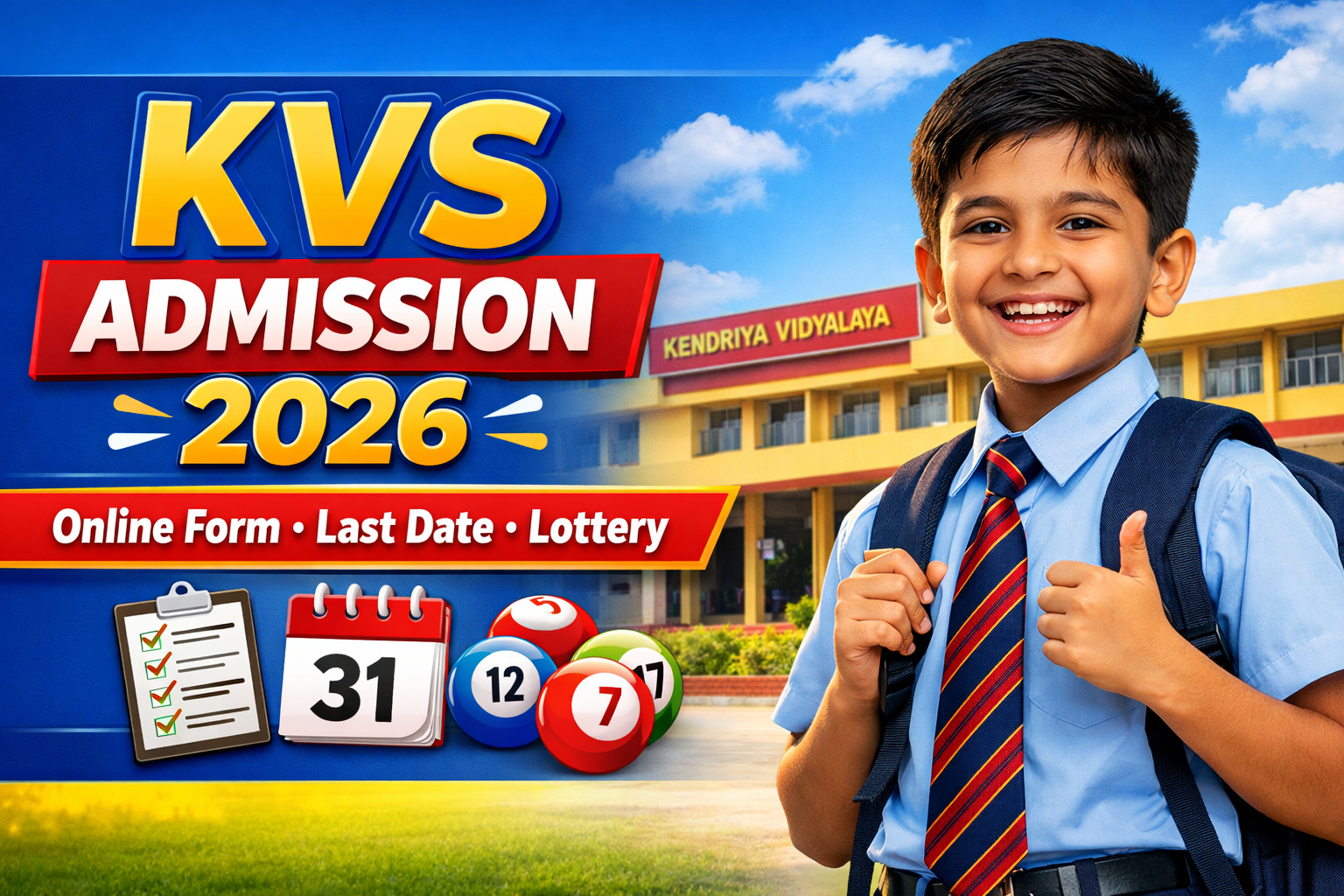
KVS Admission 2026: Online Form, Last Date, Eligibility, Lottery System – Complete Guide
Table of Contents
What is KVS Admission 2026?
Overview of Kendriya Vidyalaya Sangathan (KVS)
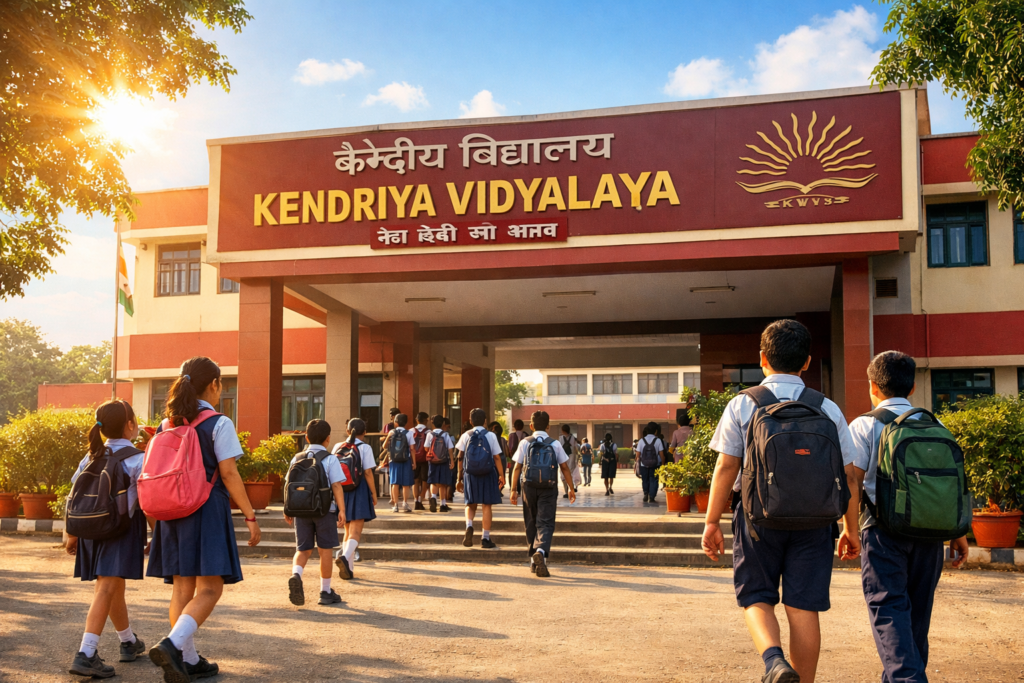
If you’ve ever heard parents talk about “the best government schools in India,” chances are they were referring to Kendriya Vidyalayas (KVs). Managed by the Kendriya Vidyalaya Sangathan (KVS) under the Ministry of Education, these schools were originally set up to cater to the educational needs of children of transferable central government employees. But over time, their reputation has grown far beyond that purpose.
KVS operates more than 1,200 schools across India and even abroad, making it one of the largest chains of schools in the country. What makes it stand out is its uniform curriculum (CBSE), consistent academic standards, and a strong focus on holistic development. Whether a student studies in Delhi, Chennai, or a remote cantonment area, the quality of education remains remarkably consistent.
| All Courses | View List | Enroll Now |
| Mock Tests/Quizzes | View All |
| Student Registration | Register Now |
| Become an Instructor | Apply Now |
| Dashboard | Click Here |
| Student Zone | Click Here |
| Our Team | Meet the Members |
| Contact Us | Get in Touch |
| About Us | Read More |
| Knowledge Base | Click Here |
| Classes/Batches: Class 6th to 12th, BA, B.Sc, B.Com (All Subjects) — Online & Offline Available | Click Here |
| Exam Preparation: SSC, Railway, Police, Banking, TET, UPTET, CTET, and More | Click Here |
| Shree Narayan Computers & Education Center | Home Page |
The admission process for KVS Admission 2026 is expected to follow the same centralized online system introduced in recent years. This means parents no longer need to stand in long queues or deal with complicated paperwork manually. Instead, everything—from filling the form to checking results—happens online.
Another interesting aspect is how structured and transparent the entire process is. The system is designed to ensure fairness, especially in entry-level classes like Class 1, where admissions are done through a lottery system rather than merit-based exams.
So, if you’re planning to secure a seat for your child in a Kendriya Vidyalaya in 2026, understanding the process early can give you a real advantage. Think of it like preparing for a marathon—you don’t just show up on race day; you train, plan, and stay informed.
Why KVS Schools Are Highly Preferred
There’s a reason why KVS admissions see lakhs of applications every year—and it’s not just because they are government schools. In fact, calling them “just government schools” would be a massive understatement. These institutions offer a rare combination of affordability, quality, and consistency, which is hard to find elsewhere.
First, let’s talk about affordability. Compared to private schools that charge hefty fees, KVS schools offer high-quality education at a nominal cost. This makes them accessible to a wide range of families without compromising on academic standards.
Then comes the curriculum. KVs follow the CBSE syllabus, which is widely recognized and aligns well with competitive exams like JEE, NEET, and CUET. This gives students a strong academic foundation right from the beginning.
But academics aren’t everything—and KVS understands that. These schools place equal emphasis on sports, arts, music, and extracurricular activities. Annual functions, sports meets, and inter-school competitions are a regular part of student life, helping children grow into well-rounded individuals.
Another major advantage is teacher quality. KVS teachers are recruited through a rigorous selection process and receive continuous training. This ensures that students are taught by competent and experienced educators who know how to adapt to different learning styles.
Finally, there’s the national integration aspect. Since KVS schools are spread across India and often cater to children from diverse backgrounds, students grow up in a multicultural environment. This exposure helps them develop adaptability, empathy, and a broader worldview.
In simple terms, KVS schools are like a well-balanced meal—nutritious, fulfilling, and accessible. That’s exactly why competition for admission is so intense every year.
Important Dates for KVS Admission 2026
Expected Notification Release Date
Timing is everything when it comes to KVS Admission 2026, and missing even a single deadline can mean waiting an entire year. That’s why staying updated with the official schedule is absolutely crucial.
Based on previous admission cycles, the official notification for KVS Admission 2026 is expected to be released around March 2026. This notification acts as the starting point of the entire admission process. It includes all the essential details—eligibility criteria, age limits, reservation policies, and step-by-step instructions for filling out the online form.
Now, here’s something many parents overlook: the notification isn’t just an announcement—it’s your instruction manual. Skipping it or skimming through it quickly can lead to costly mistakes later. For instance, even a small mismatch in documents or incorrect category selection can result in application rejection.
The notification is usually published on the official KVS website (kvsangathan.nic.in) and the dedicated admission portal. Once it’s live, the online application window opens shortly after, often within a few days.
Another important point is that KVS doesn’t send individual alerts or reminders. That means the responsibility lies entirely on parents to stay informed. Setting a calendar reminder or checking the website regularly during February and March can save you from unnecessary stress.
Think of the notification like a movie trailer—it gives you a complete preview of what’s coming next. And just like you wouldn’t want to miss the release of a much-awaited film, you definitely don’t want to miss this.
Last Date to Apply Online
If the notification is the starting line, the last date to apply online is the finish line you cannot afford to cross late. Every year, thousands of parents miss out simply because they assume they have more time than they actually do.
For KVS Admission 2026, the application window is expected to remain open for about 2 to 3 weeks, typically closing by the last week of March 2026. While that might sound like plenty of time, the reality is quite different.
The first few days usually see moderate traffic, but as the deadline approaches, the portal often experiences heavy load and slowdowns. This can make it difficult to submit the form at the last minute. In some cases, parents even face technical glitches, leading to incomplete submissions.
Another common mistake is waiting to gather documents. Many required documents—such as birth certificates, proof of residence, caste certificates, and service certificates (for government employees)—can take time to arrange. If you delay the process, you might end up rushing and making errors.
Submitting the form early also gives you a buffer period to review and correct any mistakes. While the KVS portal may allow limited edits, it’s always safer to get things right the first time.
Here’s a simple way to think about it: applying early is like catching a flight well before boarding closes—you avoid panic, delays, and unnecessary risk.
Missing the deadline means waiting for the next academic year, and given the level of competition, that’s not a situation most parents want to be in.
KVS Admission 2026 Online Form Process
Step-by-Step Registration Guide
Filling out the KVS Admission 2026 online form might look simple on the surface, but if you’ve ever dealt with school admissions before, you already know how small errors can create big headaches later. The process is fully digital, which is great for convenience—but it also means you need to be precise at every step.
The first step is visiting the official KVS admission portal. Once there, you’ll need to register using a valid mobile number and email ID. These details are important because all communication—OTP verification, login credentials, and updates—will be sent here. Think of this as creating your “admission identity.”
After registration, you log in and begin filling out the application form. This includes basic student details like name, date of birth, gender, and category. It sounds straightforward, but here’s where many people slip—the details must exactly match official documents like the birth certificate. Even a minor mismatch in spelling can lead to rejection during verification.
Next comes the school selection section. You can choose multiple Kendriya Vidyalayas in order of preference. This is not just a formality—it plays a significant role in seat allocation during the lottery process. Choosing schools strategically (based on proximity and demand) can subtly improve your chances.
Then, you upload required documents. These must be in the specified format and size. Blurry or incorrect uploads can invalidate your application, even if everything else is perfect.
Before final submission, you’ll get a chance to review the entire form. This step is often rushed—but it shouldn’t be. Take your time, double-check every field, and ensure there are no errors.
Finally, submit the form and download a copy for future reference. That confirmation page? Treat it like gold—you may need it during document verification or follow-ups.
Documents Required for Application
When it comes to KVS Admission 2026, documents are not just supporting materials—they are the backbone of your application. Even if you fill out the form perfectly, missing or incorrect documents can disqualify your child.
The most essential document is the birth certificate, which serves as proof of age. KVS is very strict about age eligibility, especially for Class 1 admissions, so this document must be accurate and clearly legible.
Next is proof of residence. This could be an Aadhaar card, electricity bill, or any government-issued document that confirms your address. The purpose here is to determine your proximity to the selected KV school, which can influence admission priority.
If you’re applying under a reserved category, you’ll need a valid caste certificate (SC/ST/OBC-NCL/EWS). It’s important that these certificates are issued by competent authorities and are up to date. Expired or improperly formatted certificates are often rejected.
For children of government employees, a service certificate is required. This document plays a key role in determining priority during seat allocation. Similarly, transfer certificates may be needed for admissions to higher classes.
Some additional documents that may be required include:
- Passport-size photograph of the child
- Disability certificate (if applicable)
- Proof of single girl child (for special quota)
One thing to keep in mind is that all documents should be clear, scanned copies in the correct format (usually PDF or JPEG). Avoid taking photos in poor lighting or with shadows—it might seem minor, but it can cause unnecessary complications.
In many ways, preparing your documents is like assembling puzzle pieces. Each one has its place, and missing even one can leave the picture incomplete.
Eligibility Criteria for KVS Admission 2026
Age Limit for Different Classes
Understanding the age criteria for KVS Admission 2026 is absolutely critical because this is one area where there is zero flexibility. If your child doesn’t meet the required age range—even by a single day—the application will be rejected without exception.
For Class 1, which is the most sought-after entry point, the child must be at least 6 years old and not more than 8 years old as of March 31, 2026 (expected cutoff). This age bracket ensures that children are developmentally ready for formal schooling.
As you move to higher classes, the age limits increase accordingly. For example:
- Class 2: 7 to 9 years
- Class 3: 8 to 10 years
- And so on…
The pattern continues in a structured way, maintaining a consistent progression. It’s almost like climbing a ladder—each step has a clearly defined starting and ending point.
There are, however, certain relaxations. Children belonging to SC/ST categories may receive a relaxation of up to 2 years, while differently-abled children may get up to 5 years of relaxation. These provisions are designed to ensure inclusivity and equal opportunity.
Parents often make the mistake of assuming that schools might “adjust” age criteria in special cases. That’s not how KVS operates. The system is standardized across all schools, and rules are applied uniformly.
So before you even start filling out the form, double-check your child’s date of birth against the official criteria. It’s a simple step, but it can save you from a lot of disappointment later.
Reservation Policy and Priority Categories
One of the defining features of KVS Admission 2026 is its well-structured reservation and priority system. Unlike private schools where admissions can sometimes feel unpredictable, KVS follows a transparent and rule-based approach.
The reservation policy ensures representation from different social and economic groups. Typically, the seat distribution includes:
- 15% for SC (Scheduled Castes)
- 7.5% for ST (Scheduled Tribes)
- 27% for OBC (Non-Creamy Layer)
- 10% for EWS (Economically Weaker Sections)
In addition to these, there are special provisions for:
- Differently-abled children (3%)
- Single girl child quota
- Children of defense personnel and ex-servicemen
But what truly sets KVS apart is its priority category system. Admissions are not just based on eligibility—they’re also influenced by the parent’s employment status.
For example, children of central government employees and transferable staff are given higher priority. This is followed by state government employees and then private sector applicants.
Here’s a simplified comparison:
| Priority Level | Category |
|---|---|
| Priority 1 | Central Govt. employees (transferable) |
| Priority 2 | Central Govt. employees (non-transferable) |
| Priority 3 | State Govt. employees |
| Priority 4 | Others |
This hierarchy plays a crucial role during the lottery process. Even if two applicants meet all eligibility criteria, the one in a higher priority category will have a better chance of selection.
Think of it like boarding a flight—everyone has a ticket, but some passengers are allowed to board earlier based on their category.
KVS Lottery System Explained
How the Lottery System Works
The lottery system is perhaps the most talked-about—and often misunderstood—aspect of KVS Admission 2026, especially for Class 1. Unlike traditional admissions that rely on entrance exams or interviews, KVS uses a random selection process to ensure fairness.
Once the application window closes, all valid applications are grouped based on categories and priorities. Then, a computerized lottery is conducted to select students. This process is usually carried out in a transparent manner, often in the presence of school officials and sometimes even parents.
The key idea here is equal opportunity. Since young children are involved, KVS avoids academic screening and instead relies on chance—within a structured framework.
But it’s not purely random chaos. The system follows a sequence:
- Seats are first allocated to priority categories
- Within each category, the lottery is conducted
- Waiting lists are also generated
This means your child could still get admission even if not selected initially, depending on seat availability and withdrawals.
The results are published online and also displayed on school notice boards. Each selected candidate is assigned a position, making the process fully transparent.
In a way, the lottery system is like drawing names from a hat—but with rules that ensure fairness and inclusivity.
Factors Affecting Selection Chances
Even though the lottery system is random, certain factors can influence your child’s chances indirectly. Understanding these can help you make smarter decisions during the application process.
First is priority category. As discussed earlier, children of central government employees—especially those with transferable jobs—have a clear advantage. This is built into the system and significantly impacts selection probability.
Second is number of applicants vs available seats. Popular KVs in metro cities often receive thousands of applications for just a few dozen seats. In contrast, schools in less crowded areas may have better odds.
Third is school preference order. Listing multiple schools increases your chances of getting a seat somewhere, even if not your top choice.
Another subtle factor is distance from school. While not always decisive, proximity can sometimes play a role in tie-breaking situations.
Lastly, accuracy of application matters more than you think. Invalid or incomplete forms are excluded from the lottery altogether, which effectively reduces your chances to zero.
So while you can’t control the randomness of the draw, you can definitely position yourself better within the system.

Class-Wise Admission Details
Admission Process for Class 1
When it comes to KVS Admission 2026, Class 1 is where the real action happens. This is the primary entry point for most students, and naturally, it attracts the highest number of applications. If you imagine the admission process as a funnel, Class 1 sits right at the top—wide, competitive, and filled with hopeful parents trying to secure a spot.
The process for Class 1 is entirely online and lottery-based, which means there are no interviews, no written tests, and no “performance pressure” on the child. That’s actually a relief, right? Instead, the focus shifts to eligibility, documentation, and category-based prioritization.
Once the application window closes, KVS organizes the data and conducts the lottery. What’s interesting is that seats are not filled all at once. Instead, they are distributed in phases:
- First, seats are allocated to priority categories
- Then, reservations are applied (SC/ST/OBC/EWS, etc.)
- Finally, the remaining seats go into the general lottery pool
The results are published in the form of selection lists, often followed by second and third lists depending on seat availability. If your child’s name appears, the next step is document verification at the allotted school.
One thing many parents don’t realize is the importance of the waiting list. Just because your child isn’t in the first list doesn’t mean it’s over. Seats often open up due to transfers, non-reporting candidates, or documentation issues.
So, patience becomes part of the process. It’s a bit like waiting for a train reservation to get confirmed—you keep checking, hoping your number moves up.
Admission Process for Higher Classes
Unlike Class 1, admissions to higher classes (Class 2 and above) follow a slightly different approach. Here, the process depends heavily on vacancy availability. In simple terms, if there are no vacant seats, there will be no admission—no matter how eligible your child is.
For Classes 2 to 8, admissions are usually conducted without any entrance test. If seats are available, they may still use a lottery system similar to Class 1, but with fewer applicants and less complexity.
However, things change when you reach Class 9 and above. At this level, KVS may conduct written entrance tests to assess the student’s academic readiness. These tests typically cover subjects like Mathematics, Science, English, and Hindi, depending on the class.
Another important requirement is the Transfer Certificate (TC) from the previous school. This document confirms the student’s academic history and is mandatory for admission into higher classes.
Parents should also note that admissions in higher classes often happen after Class 1 admissions are completed, usually around April or May. This means you need to stay alert even after the main admission cycle is over.
In many ways, higher-class admissions are like last-minute openings in a fully booked event. You need to be prepared, quick to act, and ready with all documents.
KVS Admission Fees Structure
Understanding the fee structure of KVS Admission 2026 is one of the reasons why these schools are so popular. Compared to private institutions that often feel like a financial burden, KVS offers a surprisingly affordable yet high-quality education.
For starters, tuition fees for certain categories are completely exempted. This includes:
- Girls (up to Class 12 in many cases)
- SC/ST students
- Children of KVS employees
- Children of armed forces personnel (in specific cases)
For other students, the monthly tuition fee is still quite reasonable. Here’s a simplified overview:
| Class Level | Approx Monthly Fee |
|---|---|
| Class 1–5 | ₹0 (mostly exempted) |
| Class 6–8 | ₹100–₹200 |
| Class 9–10 | ₹200–₹300 |
| Class 11–12 | ₹300–₹500 |
Apart from tuition, there may be additional charges such as:
- Computer fund
- Vidyalaya Vikas Nidhi (VVN)
- Miscellaneous annual charges
Even with these additions, the overall cost remains significantly lower than private schools offering similar facilities.
What makes this even more appealing is the value you get in return—qualified teachers, CBSE curriculum, sports facilities, libraries, and extracurricular activities.
Think of it like getting a premium experience at a budget price. That balance between cost and quality is what keeps KVS in such high demand year after year.
Documents Verification Process
Once your child is selected in the KVS Admission 2026 list, the journey isn’t over yet. In fact, one of the most critical stages begins—the document verification process. This is where your application is thoroughly checked for accuracy and authenticity.
Parents are required to visit the allotted Kendriya Vidyalaya with original documents along with photocopies. The school authorities will verify each detail submitted during the online application.
This includes:
- Birth certificate (for age verification)
- Caste or category certificate
- Residence proof
- Service certificate (if applicable)
- Passport-size photographs
If there’s any mismatch between the online form and the documents, the admission can be cancelled immediately. That’s why accuracy during the application stage is so important.
Another thing to keep in mind is timing. Schools usually provide a specific window for verification, and missing it can result in losing your seat.
In a way, this step acts like a final checkpoint—only those who pass through it successfully secure admission.
KVS Admission Guidelines for Parents
Navigating the KVS Admission 2026 process can feel overwhelming, especially if it’s your first time. But with the right approach, it becomes much more manageable.
First, always rely on official sources for information. Avoid rumors or unofficial websites that may provide outdated or incorrect details.
Second, keep all your documents ready and organized before the application starts. This saves time and reduces stress.
Third, apply early. Don’t wait until the last day, thinking you’ll “figure it out later.” That strategy rarely works.
Also, be realistic with your expectations. While everyone wants admission to the most popular KV in their area, having backup choices can make a big difference.
Parenting during admission season is a bit like playing chess—you need to think ahead, stay calm, and make calculated moves.
Common Mistakes to Avoid During Application
Even though the KVS Admission 2026 process is straightforward, many parents end up making avoidable mistakes that cost them a seat. The frustrating part? Most of these errors are completely preventable.
One of the most common issues is incorrect personal details. A small spelling mistake in the child’s name or a wrong date of birth might seem minor, but it can lead to rejection during verification. Always cross-check with official documents before submitting the form.
Another frequent mistake is selecting the wrong category or priority level. Some parents either misunderstand the categories or assume they qualify for a higher priority. This can backfire if the supporting documents don’t match the claim.
Then there’s the problem of poor-quality document uploads. Blurry images, cut-off text, or incorrect file formats can make your application invalid. It’s worth taking a few extra minutes to ensure everything is clear and properly formatted.
Many also forget to save or download the confirmation page after submission. This document is often required later, and not having it can create unnecessary complications.
Rushing the application at the last minute is another major issue. When you’re under time pressure, mistakes are almost inevitable.
Think of the application form like a contract—once submitted, it carries weight. Treat it with the same level of attention and care.
KVS School Facilities and Benefits
When parents think about KVS Admission 2026, they’re not just thinking about getting a seat—they’re thinking about the kind of environment their child will grow up in. And this is exactly where Kendriya Vidyalayas quietly outperform many alternatives. The facilities offered are not flashy for the sake of it, but they are practical, well-maintained, and focused on real development.
Most KVs are equipped with smart classrooms, science laboratories, computer labs, and well-stocked libraries. These aren’t just decorative features—they’re actively used in day-to-day learning. Imagine your child not just reading about science experiments but actually performing them in a lab. That hands-on exposure builds curiosity in a way textbooks alone never can.
Sports infrastructure is another major highlight. From playgrounds and courts to structured physical education programs, KVS ensures that students stay physically active. Annual sports days and inter-school competitions are common, helping students develop teamwork and confidence.
Then there’s the emphasis on co-curricular activities—music, art, debates, quizzes, and cultural programs. These activities aren’t treated as optional extras; they’re part of the school culture. It’s like giving children multiple stages to discover what they’re truly good at.
Another underrated benefit is the uniformity across KVS schools nationwide. If a child’s parent gets transferred from one city to another, the transition is smooth. Same syllabus, similar teaching patterns—it’s almost like continuing the same story in a new setting.
In essence, KVS schools offer an ecosystem where academics, creativity, and discipline grow together. It’s not about producing just toppers—it’s about shaping capable, adaptable individuals.
Transfer Cases in KVS Admission
Transfers are a reality for many families, especially those in government services. That’s why KVS Admission 2026 includes specific provisions for transfer cases, making life a little easier for parents who move frequently.
If a child is already studying in a Kendriya Vidyalaya and the parent gets transferred to another city, the student can apply for a transfer admission. This process is generally smoother compared to fresh admissions because the student is already part of the KVS system.
However, it’s not entirely automatic. Admission still depends on seat availability in the receiving school. If there’s no vacancy, the child may be placed on a waiting list or offered admission in a nearby KV.
For students transferring from non-KVS schools, the process is slightly more complex. They must meet all eligibility criteria and provide documents like:
- Transfer Certificate (TC)
- Previous academic records
- Proof of transfer (for government employees)
Timing also plays a role. Transfer admissions are usually processed after the main admission cycle, so patience is key.
Think of it like switching trains mid-journey—you’re still on track, but you need to ensure there’s space on the next one.
KVS Admission for Special Categories
One of the strengths of KVS Admission 2026 is its inclusive approach. The system recognizes that not all applicants come from the same background, and it provides special provisions for certain categories to ensure equal opportunity.
For instance, the Single Girl Child quota is a unique initiative aimed at promoting girls’ education. Under this scheme, a certain number of seats are reserved or additional support is provided, depending on the class and availability.
Children with disabilities (Divyang category) are also given special consideration. Apart from reservation in seats, KVS schools often provide supportive infrastructure and teaching methods tailored to their needs.
Another important category includes children of defense personnel, paramilitary forces, and ex-servicemen. Given the nature of their parents’ jobs, these children often face frequent relocations, and KVS ensures they receive stable educational opportunities.
There are also provisions for economically weaker sections (EWS), ensuring that financial limitations do not become a barrier to quality education.
This layered approach makes KVS admissions feel less like a rigid system and more like a balanced framework designed for fairness.
Comparison: KVS vs Other Government Schools
When evaluating KVS Admission 2026, many parents naturally compare Kendriya Vidyalayas with other government schools. And while both fall under the public education system, the differences can be quite significant.
Here’s a clear comparison:
| Feature | KVS Schools | Other Government Schools |
|---|---|---|
| Curriculum | CBSE | State Boards |
| Teacher Recruitment | Centralized & Competitive | राज्य स्तर (varies by state) |
| Transfer सुविधा | Nationwide uniformity | Limited |
| Infrastructure | Standardized | Varies widely |
| Medium of Instruction | Primarily English/Hindi | Regional languages |
| Extracurricular Activities | Strong focus | Often limited |
What really sets KVS apart is its consistency. While some state government schools are excellent, the quality can vary significantly from one region to another. In contrast, KVS maintains a uniform standard across the country.
Another advantage is the alignment with national-level competitive exams, thanks to the CBSE curriculum. This gives KVS students a slight edge when preparing for future academic challenges.
That said, it’s not about labeling one system as “better” universally—it’s about what fits your child’s needs. But if consistency, mobility, and structured development are priorities, KVS often stands out.
KVS Admission Helpline and Support
Even with a streamlined process, parents often have questions during KVS Admission 2026. That’s where the official helpline and support system comes into play.
KVS provides:
- Dedicated helpline numbers during the admission period
- Email support for queries
- FAQs and guidelines on the official website
These resources are especially useful when dealing with technical issues like login problems, document uploads, or form corrections.
However, here’s a practical tip—don’t wait until the last day to seek help. During peak periods, helplines can get busy, and responses may take time.
You can also visit the nearest Kendriya Vidyalaya for clarification. School staff are usually available to guide parents, especially during the admission season.
Think of the support system as a safety net—it’s there when you need it, but it works best when used proactively.
Latest Updates and News on KVS Admission 2026
Staying updated is half the battle when it comes to KVS Admission 2026. Policies, dates, and guidelines can change, and relying on outdated information can lead to mistakes.
Recent trends suggest that KVS is focusing more on:
- Digitalization of the admission process
- Increased transparency in lottery systems
- Better communication through online portals
There’s also growing attention on inclusive education and special categories, ensuring broader access to quality schooling.
Parents should regularly check the official KVS website and trusted news sources for updates. Avoid depending solely on social media forwards or unofficial blogs, as they can sometimes spread misinformation.
In a fast-moving process like admissions, being informed is like having a compass—it keeps you on the right path.
Tips to Increase Chances of Selection
While the KVS lottery system is random, there are still ways to optimize your chances without bending any rules.
Choosing multiple schools is one of the smartest moves. Instead of putting all your hopes on a single high-demand KV, diversify your options.
Understanding your priority category and applying correctly also makes a difference. If you qualify for a higher priority, ensure your documents support it.
Applying early, avoiding mistakes, and ensuring document accuracy might not directly influence the lottery—but they ensure your application actually makes it into the draw.
It’s a bit like fishing—you can’t control the fish, but you can definitely improve your setup.
State-wise Seat Availability in KVS
Seat availability in KVS Admission 2026 varies significantly across states and cities. Metro cities like Delhi, Mumbai, and Bangalore often see extremely high demand, making admission more competitive.
In contrast, KVs in smaller towns or less populated areas may have better seat availability and lower competition.
The number of sections per class and total seats per school also differ. Typically, a KV may have 40 seats per section, but this can vary.
Understanding this distribution helps parents make strategic school choices, rather than purely emotional ones.
Frequently Asked Questions About KVS Admission
Parents often have recurring questions about KVS Admission 2026, ranging from eligibility to lottery results. While we’ll cover detailed FAQs at the end, the key takeaway is this—most answers are already available in official guidelines.
The challenge isn’t lack of information—it’s knowing where to look and how to interpret it correctly.
Conclusion
KVS Admission 2026 isn’t just an application process—it’s a carefully structured system designed to balance fairness, accessibility, and quality education. From the online form to the lottery system, every step has a purpose, even if it feels overwhelming at first.
For parents, the journey is a mix of planning, patience, and a bit of luck. You can’t control the lottery, but you can control how well you prepare.
Approach it with clarity, stay organized, and keep expectations realistic. Because at the end of the day, education isn’t just about getting into a particular school—it’s about creating the right environment for your child to grow.
FAQs
1. When will KVS Admission 2026 start?
KVS Admission 2026 is expected to begin in March 2026 with the release of the official notification.
2. Is there any entrance exam for Class 1 admission?
No, Class 1 admissions are conducted through a lottery system without any entrance test.
3. Can I apply to multiple KVS schools?
Yes, parents can select multiple schools in order of preference during the application process.
4. What happens if my child is not selected in the first list?
You should wait for subsequent lists, as seats may become available due to cancellations or non-reporting candidates.
5. Are KVS schools free of cost?
Many categories receive fee exemptions, and overall fees are very low compared to private schools.